
Rome, Venice, Florence… These major cities of art have long embodied Italy’s image in the imagination of travellers. But beyond these iconic destinations, the country reveals a multitude of regions, landscapes and local expertise that invite visitors to discover a different way of travelling.
It is this more diverse and sometimes lesser-known Italy that the country sought to showcase at the 2026 edition of IFTM.
From nature-based itineraries to villages, from gastronomy to heritage, and from the coastline to outdoor activities, Italy’s tourism offering is evolving to meet the needs of travellers seeking closer connections with local areas and their inhabitants.
This evolution is also accompanied by a reflection on how to travel: prioritising more sustainable forms of mobility, discovering destinations outside the peak season, venturing beyond the most frequented routes and achieving a better distribution of tourist flows.
Federica Galbesi, Director of the Italian National Tourist Board (ENIT) in France, shared her vision of this new approach to travel with Airs de Paris.
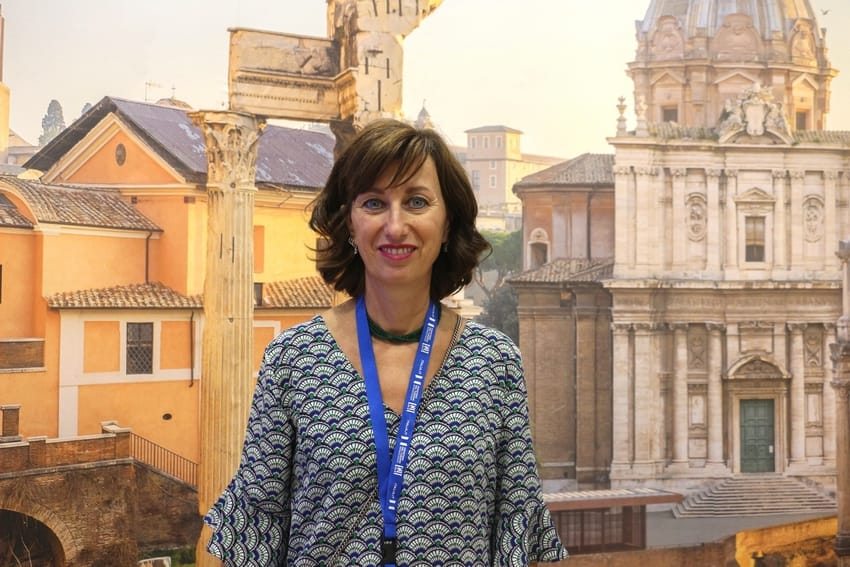
Why is Italy’s presence at IFTM important?
For us, participating in IFTM is a matter of course. We attend every year because France is one of our priority markets. It is currently our third-largest international market, after the United States and Germany.
This year, we particularly want to focus on more responsible and sustainable tourism, as well as new ways of discovering local areas.
In particular, we want to develop experiential tourism, outdoor activities and outdoor pursuits, and inspire visitors to discover a different Italy, sometimes far removed from the most traditional itineraries.
Which destinations best illustrate this evolution?
Liguria, in particular, is an excellent example of this new approach. It is easily accessible from France, especially by train, which already makes it possible to envisage travel with a reduced environmental impact.
Genoa, its main city, is also a fine example of this transformation. The city is notably associated with the architect Renzo Piano, who is well known in France. He contributed to the redevelopment of Genoa’s Old Port, with an approach aimed at enhancing the heritage while incorporating environmental and sustainable development considerations.
This is precisely the approach we want to encourage: tourism that is more accessible, more responsible and more focused on discovery and experience.
Today, we must take into account the major challenges we face, particularly climate change and environmental preservation. But we must also reflect on how we travel and how we discover different regions.
Italy, like many European destinations, is facing the phenomenon of overtourism. How are you working to distribute visitors more evenly?
This is indeed an important issue. Through our strategy across the various international markets, we are seeking in particular to extend the tourist season and distribute visitor flows more evenly.
The aim is to prevent visitors from concentrating exclusively in the summer months, which are also the periods of peak tourist activity.
Encouraging travellers to visit at other times of the year helps distribute visitor flows more evenly and also provides a response to overtourism.
We also want to raise awareness of alternative destinations.
International visitors, particularly those coming from far away, often begin their stay in the major cities of art: Venice, Rome or Florence. Our role is then to encourage them to venture further afield, extend their trip and discover other regions.
The Marche, Abruzzo, Liguria and Piedmont, for example, offer a wide variety of landscapes, heritage, gastronomy and activities.
These regions also have significant visitor accommodation capacity. They can therefore help distribute visitors more evenly while offering a different way to discover Italy.
Beyond Rome, Venice, Florence and the other classic destinations, the country is now inviting visitors to explore another facet of its identity: lesser-known regions, local experiences, nature-based itineraries and a new approach to travel that is more responsible and more mindful of the environment.
The 2026 edition of IFTM is part of this momentum. Italy is showcasing the richness and diversity of its regions, with a tourism offering that brings together heritage, gastronomy, coastline, nature, culture and authentic experiences.
La Ligurie,
a destination with many facets
Through this new approach, Italy is seeking to reshape the image of a destination that is already world-renowned. Its heritage remains at the heart of its appeal, but there is now a growing desire to introduce visitors to less frequented regions, local expertise and experiences that bring them closer to nature and local communities.
Liguria perfectly illustrates this evolution. Between sea and mountains, charming villages, gastronomy and outdoor activities, the region offers a different way to discover Italy.
Iacopo Avegno, Director of Tourism for the Liguria region, presented this multifaceted destination to Airs de Paris, highlighting its art of living, natural environment and new experiences.
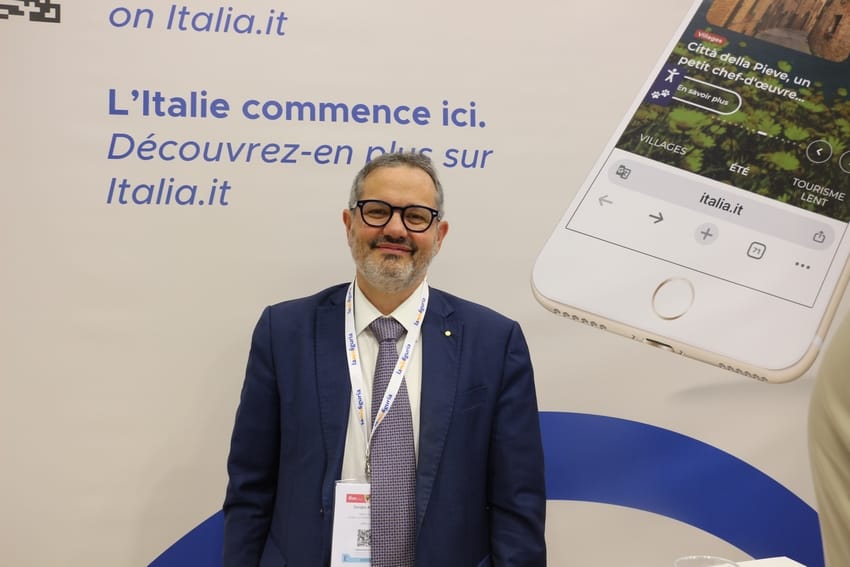
What can visitors discover in Liguria?
Liguria is a particularly interesting region, especially because of its exceptional location along the sea. You are certainly familiar with Portofino, as well as the Cinque Terre and its national park, which is a UNESCO World Heritage Site. These are two of Italy’s most iconic destinations.
They offer visitors a different way to enjoy the outdoors: green tourism, sea-related activities, water sports…
But Liguria is not just about its coastline. We also have a magnificent hinterland, which we are now keen to promote and introduce to more visitors.
In particular, we are developing new hiking and cycling routes. I believe we have one of the longest coastal cycle paths in Europe, stretching for around 45 kilometres. Much of the route runs directly along the coast, offering exceptional scenery.
There are also all those inland villages, particularly the hilltop villages nestled in the mountains. We are creating and developing new cycling routes that allow visitors to take smaller roads, pass through villages and discover another side of the region.
The aim is precisely to introduce visitors to this more hidden side of Liguria: its forests, villages and cliffs, where they can also enjoy rock climbing.
And then, of course, there is the gastronomy. We have a wealth of local specialities. The best known is undoubtedly pesto, which is a genuine Ligurian tradition. But there is also focaccia, farinata, focaccia al formaggio and our olive oil, which is one of the region’s great specialities.
Why is Liguria so appealing to French tourists?
France is currently the second-largest foreign market for our region. Many French visitors come to Liguria, particularly because the western part of the region is very close to the French border.
It is therefore easy to get here by car, but also by plane. Nice Airport also provides relatively easy access to the region.
French visitors also come to Liguria to take the boat. Genoa and Savona are major ports, with connections to Corsica and North Africa, among other destinations.
They also greatly appreciate campsites, B&Bs and small villages, where they can stay in typical apartments full of character.
Personally, I am very fond of Genoa. It is a city with a rich cultural and historical heritage, but it also has beautiful green spaces where visitors can stroll and enjoy various outdoor activities.
Liguria is a relatively small region, but that is precisely what makes it special. In Genoa, for example, you can enjoy the sea and then travel just a few kilometres inland to go hiking or trekking. This proximity between sea and mountains is truly one of the features that make Liguria unique.
Beyond the sea and beaches, what new experiences would you like to offer travellers, particularly Chinese visitors?
This is precisely one of our goals: to develop a new approach to tourism in which the sea is no longer the only reason to visit Liguria.
The sea is obviously a major asset. It is a little like skiing in Trentino: it is an activity that naturally attracts visitors. But we now want to encourage them to discover other parts of the region, which are just as beautiful, authentic and distinctive.
For Chinese tourists, for example, if beaches are not their priority, we can offer more touring holidays: travelling from village to village, discovering the landscapes and traditions, and enjoying a more immersive experience.
For those seeking luxury, Portofino remains an unmissable destination. There are some very fine hotels, including five-star establishments, offering exceptional views of the sea and the village.
Nearby, Santa Margherita Ligure and Rapallo also offer wonderful experiences. These destinations can be appealing throughout the year, including in winter. For those who do not necessarily want to swim or spend their time in the sun, the sea in winter offers a completely different atmosphere: quieter and more intimate, while retaining the elegance that characterises the region.
We also have magnificent ports where boat and yacht owners can keep their vessels in the region and return to them later.
Our aim, therefore, is to better showcase the “green” side of Liguria: its landscapes, scents, flavours, gastronomy, hiking routes and lesser-known villages.
That is truly our ambition: not simply to attract visitors for the sea, but to inspire them to discover the full richness of the region and the diversity of experiences it has to offer.
Gênes,
a city between the sea, culture and authenticity
Between the Mediterranean and the mountains, Liguria offers a different way to discover Italy. At the heart of the region, Genoa, its capital, has a distinctive identity: a port city deeply shaped by its history, but also a vibrant destination where gastronomy, culture, nature and new experiences come together.
Airs de Paris also met with Sandra Torre, Director of the Genoa Tourist Board, who introduces us to an authentic city, rich in heritage and firmly committed to embracing new ways of travelling.
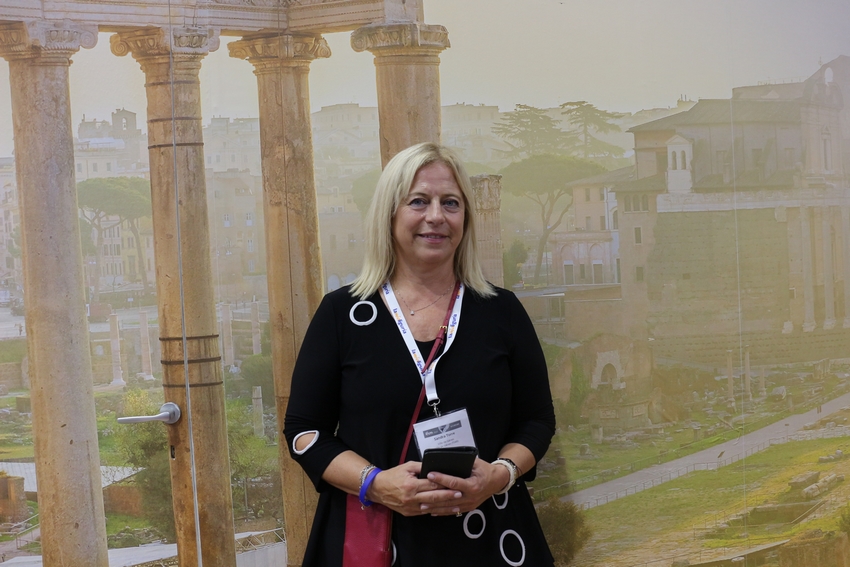
What makes Genoa an authentic tourist destination today?
Genoa is a city located by the sea, but it is also surrounded by numerous hills. It has an exceptional historic centre, one of the largest in Europe. Above all, this historic centre is still inhabited by the people of Genoa. This is what gives it genuine authenticity and a distinctive atmosphere.
Genoa can also be discovered through its cuisine, as gastronomy is deeply rooted in our history and identity. It is relatively simple cuisine, but it is essential to understanding the city and its inhabitants. The idea, therefore, is to eat like the Genoese and discover the city through its culinary traditions.
We have also developed numerous outdoor experiences, particularly cycling, hiking and guided tours. These activities offer a different way to discover Genoa while remaining mindful of the environment.
Genoa therefore boasts a rich cultural heritage linked to its maritime history, as well as to nature and the many green spaces surrounding the city. Gastronomy also plays an important role. In recent years, Genoa has also received recognition from the Michelin Guide and now has three Michelin-starred restaurants.
But our heritage is obviously not limited to cuisine. We have an exceptional historical and architectural heritage, as well as a strong presence of nature, with the sea, hills and landscapes surrounding the city.
It is also important to emphasise that Genoa is a destination that can be discovered all year round. We offer numerous cultural activities, including exhibitions, museums and iconic landmarks such as the Doge’s Palace.
Genoa can therefore be explored through its culture, its gastronomy—which is itself a form of culture—but also through a wide range of outdoor experiences, both in the historic centre and in the surrounding areas, to the east and west of the city.
Finally, around Genoa, there are many small fishing villages that can be reached on foot or by bicycle. This offers an opportunity to discover another side of the region, one that is more natural and intimate.
Who are your main visitors, and what are they looking for when they come to Genoa?
We welcome many French tourists, particularly because France is a nearby market. We also receive visitors from China and Japan, who are particularly interested in our culture, history, identity and cuisine.
We are therefore seeking to develop experiences that enable French tour guides and tourism professionals, in particular, to offer their visitors a more authentic and immersive experience.
I believe that what these travellers are primarily looking for is precisely a sense of identity, authenticity, history and experience.
Although we still welcome relatively few Chinese tourists, we have noticed that Japanese visitors are also particularly sensitive to this sense of identity and to the discovery of an authentic culture.
That is why we want to offer an experience that goes beyond visiting the best-known monuments and genuinely enables visitors to understand Genoa, its history, its inhabitants, its cuisine and its surroundings.
Interview|专访|Interview : Wendy
Rédaction|编辑|Editorial:Hervé
Français|法语|French :
https://www.airsdeparis.fr/art-de-vivre/et-si-litalie-se-decouvrait-autrement/
Chinois|中文|Chinese :
https://airsdeparis.org/lifestyle/italy-in-a-different-way/
Anglais|英语|English :
https://airsdeparis.com/lifestyle/what-if-italy-were-discovered-in-a-different-way/
Magazine digital|数字杂志|Digital Magazine
Airs de Paris : 2026 Autumn & winter :
https://airsdeparis.org/a-la-une/airs-de-paris-2026-autumn-winter/

Fashion 2026 – Autumn & winter :
https://airsdeparis.org/publication/airs-de-paris-fashion-2026-autumn-winter/

Kiosque|杂志亭|Newsstand
Édition papier |纸质版 |Print Edition
https://www.journaux.fr/produits/presse/F%C3%A9minin-6/Airs-de-Paris-280044

Abonnement|订阅|Subscription
https://www.uni-presse.fr/abonnement/abonnement-magazine-airs-de-paris/
