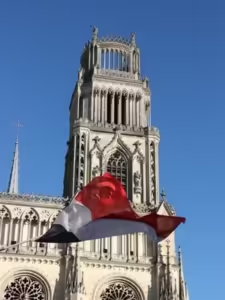
In the heart of the Loire Valley, Orléans exudes an understated elegance, shaped by centuries of history and deeply connected to its river.
Just one hour from Paris by train, this city reveals another side of the French art of living, where heritage, culture and the gentle pace of life along the Loire come together to create a truly distinctive atmosphere.
As you wander through its streets, historic façades tell stories of its illustrious past, half-timbered houses evoke its medieval heritage, and lively squares reflect the city’s vibrant character.
Further afield, the banks of the Loire and the landscapes surrounding the river invite visitors to slow down, take in the scenery and rediscover the simple pleasure of a leisurely stroll along the water.
Orléans remains inextricably linked to Joan of Arc, whose extraordinary story left a lasting mark on the city’s destiny. Yet the city cannot be defined by this single chapter of its history. Beyond this iconic legacy lies a remarkable architectural heritage, a thriving cultural scene and a contemporary identity that is constantly evolving.
From medieval remains to contemporary artistic creations, from historic alleyways to the natural landscapes along the Loire, Orléans has cultivated a subtle balance between memory and modernity.
This wealth of heritage has earned Orléans the official designation of Ville d’art et d’histoire (Town of Art and History), recognising its commitment to preserving, showcasing and passing on its architectural and cultural legacy.
More than simply a heritage destination, Orléans reveals itself as a vibrant, welcoming city with an open connection to its river. It is a place where visitors can take their time, explore at their own pace and immerse themselves in the gentle art of living that makes the Loire Valley so distinctive.
In the footsteps of
Joan of Arc
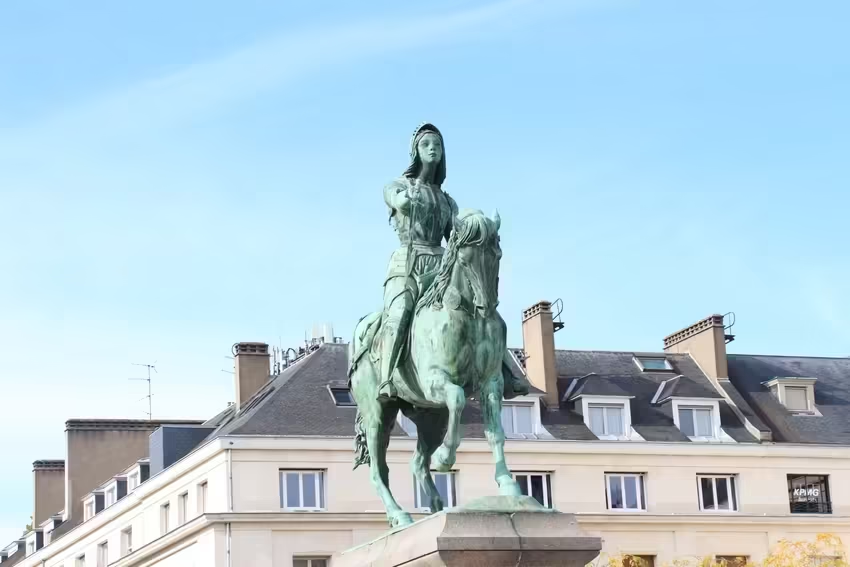
A true focal point of city life, Place du Martroi is one of Orléans’ most iconic landmarks.
At its centre stands the majestic equestrian statue of Joan of Arc, created by sculptor Denis Foyatier and unveiled in 1855.
It pays tribute to the woman who helped liberate Orléans from the English siege in 1429, during the Hundred Years’ War. An inseparable part of the city’s identity, Joan of Arc remains deeply rooted in the collective memory of the people of Orléans.
Every year in May, the famous Joan of Arc celebrations, known as the Fêtes johanniques, bring this historic episode back to life through parades, ceremonies and a host of events inspired by the Middle Ages.
SAINTE-CROIX CATHEDRAL
An architectural masterpiece spanning the centuries
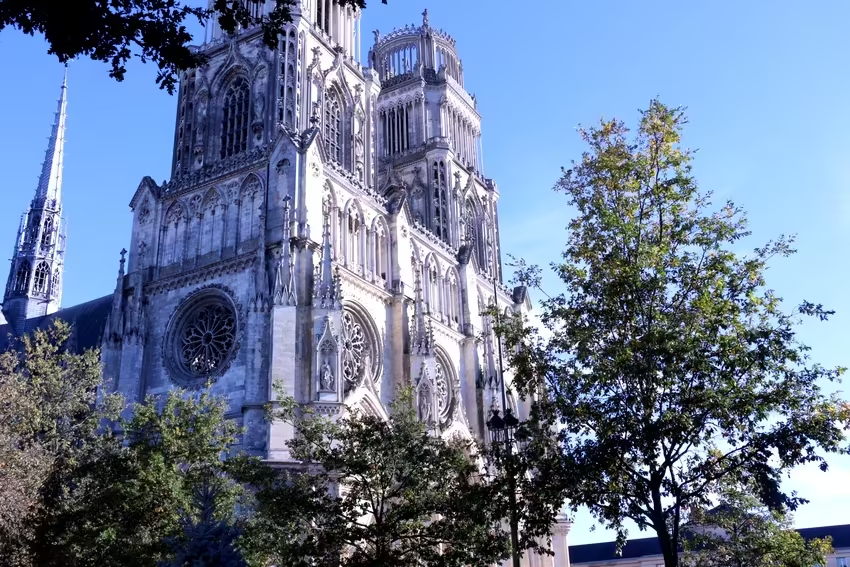
Dominating the historic heart of Orléans, Sainte-Croix Cathedral impresses visitors both with its monumental proportions and the richness of its history. Construction began in 1287 and was officially completed in 1829, spanning more than five centuries marked by wars, destruction and reconstruction.
Inspired by Gothic architecture, the cathedral stands out for its soaring vaults, elegant pointed arches and vast windows that allow natural light to flood the interior. Yet its architecture also tells a remarkable story: largely destroyed during the French Wars of Religion in 1568, the building was reconstructed from 1601 onwards under the impetus of King Henry IV.
At a time when Classical and Baroque architecture were gradually dominating Europe, the architects chose to retain the Gothic style when rebuilding the cathedral. The result is a remarkable combination of Gothic verticality and monumental proportions with the architectural principles of the Classical period.
Work continued throughout the reigns of Louis XIII, Louis XIV and Louis XV. The transept façades, decorative elements and certain architectural details still bear the mark of these successive periods.
The western façade, framed by two monumental towers, gives the cathedral its unmistakable silhouette. Construction work continued into the 19th century, notably with the completion of the present central spire in 1858.
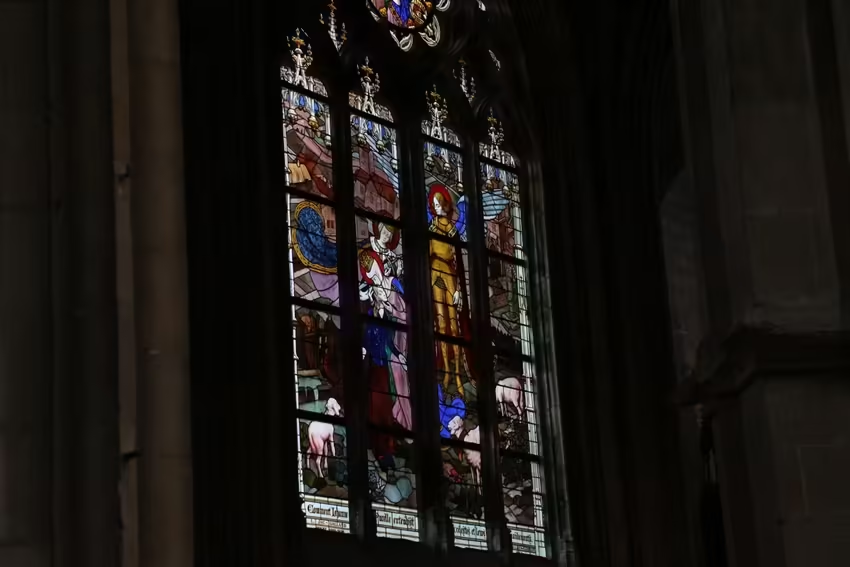
The stained-glass windows are another remarkable feature. Several ensembles date from the 19th century, including the ten windows in the side aisles depicting episodes from the life of Jeanne d’Arc .
Beyond its remarkable architecture, Sainte-Croix Cathedral also houses a spiritual treasure that gave it its name: relics of the Cross on which Jesus Christ is believed to have been crucified. According to tradition, these fragments were presented to Saint Euverte, Bishop of Orléans, by Saint Helena, mother of Emperor Constantine, in the 4th century.
Preserved in precious reliquaries, these relics bear witness to the long-standing Christian tradition in Orléans. Here, architectural history meets spiritual heritage, giving the monument a significance that extends far beyond its imposing beauty.
HÔTEL GROSLOT
A Renaissance interlude
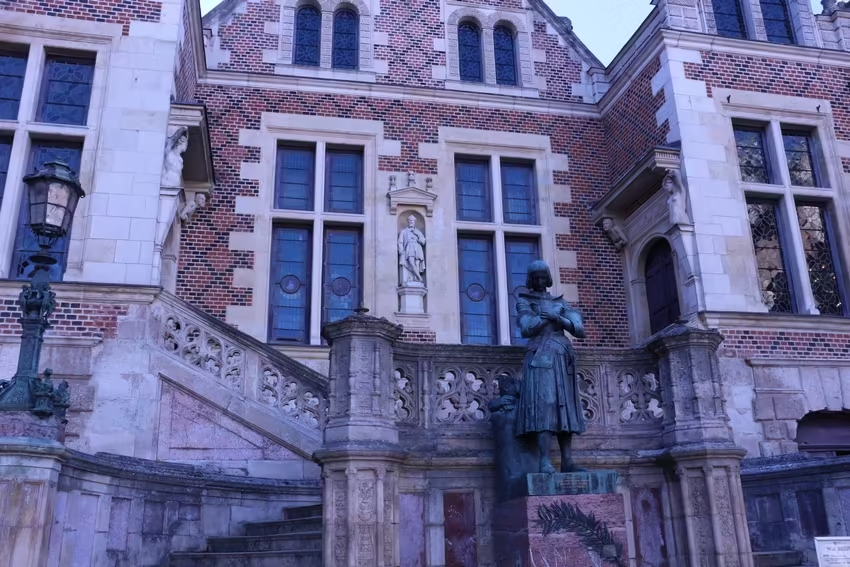
Just a few steps from Sainte-Croix Cathedral, Hôtel Groslot reveals one of the finest historic residences in Orléans. With its red-brick façade, geometric patterns and elegant double-flight staircase, this former private mansion offers a remarkable glimpse into French Renaissance architecture.
Built between 1549 and 1558 for Jacques Groslot, Bailiff of Orléans, the building captivates visitors with its balanced proportions and subtle combination of brick and stone. Its architectural composition reflects the Renaissance taste for harmonious forms, symmetry and refined ornamentation.
Behind this elegant façade also lies a significant episode in French royal history. In 1560, the residence welcomed the young King Francis II, his wife Mary, Queen of Scots, and Catherine de’ Medici. It was here, in this private mansion in Orléans, that the king died on 5 December 1560, at the age of just 16. This event secured the building’s lasting place in French history.
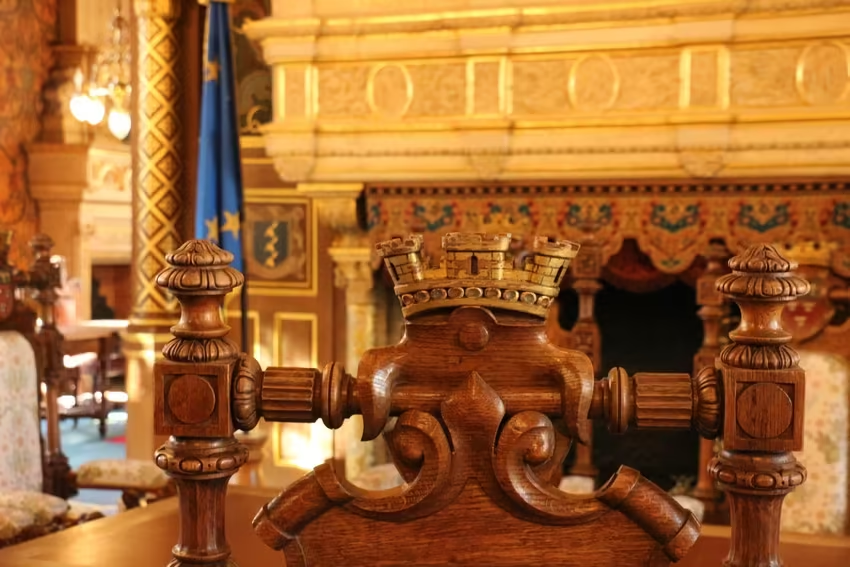
Acquired by the municipality in the 18th century, Hôtel Groslot subsequently became the town hall, a function it retained until 1981. Behind its remarkable façade, the historic reception rooms reveal refined interiors featuring carved wood panelling, tapestries and antique furnishings, all testifying to the building’s prestigious past.
In the square outside, a statue of Joan of Arc, created by Princess Marie of Orléans, extends this encounter with history and recalls the enduring bond between the city and its heroine.
Combining Renaissance elegance, historical significance and architectural richness, Hôtel Groslot is an essential stop for anyone wishing to discover the soul of Orléans. A timeless interlude in the heart of a heritage landscape where every stone seems to tell a story.
THE LOIRE
A landscape that invites you to slow down
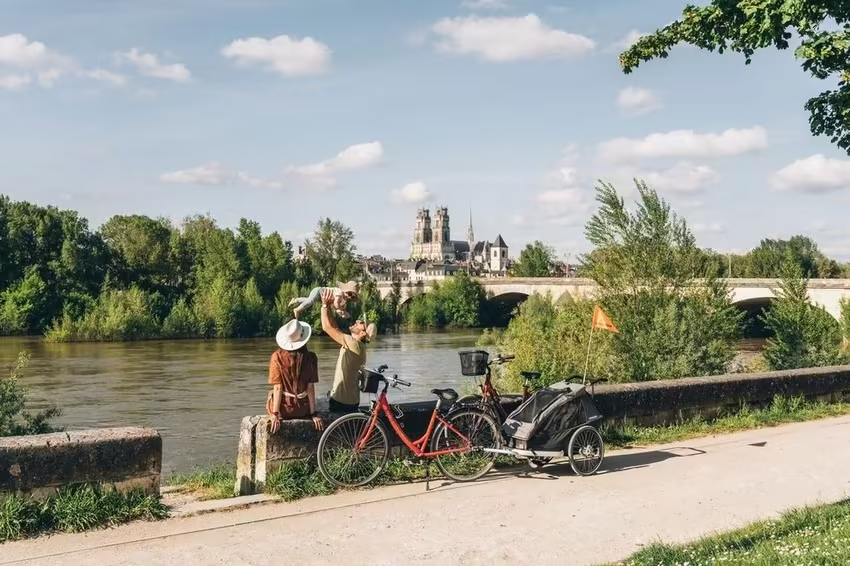
In Orléans, the discovery of its heritage naturally extends towards the Loire. Listed as a UNESCO World Heritage Site as part of the cultural landscapes of the Loire Valley, the river is one of the region’s greatest treasures.
Its landscaped riverbanks offer beautiful views across the city and invite visitors to enjoy a leisurely walk along the water. On foot or by bicycle, visitors discover a living landscape dotted with sandbanks, wild islands and an exceptionally rich variety of wildlife. As the seasons change, the light transforms the riverbanks, revealing the full beauty of the Loire Valley scenery.
To appreciate the river from a different perspective, a boat trip offers another way to discover Orléans and its surroundings. Moving gently with the current, the city’s façades, bridges and natural riverbanks reveal themselves from an entirely different angle. This peaceful journey along the Loire offers an opportunity to take in the scenery and reconnect with a gentler pace of life.
This close relationship between urban heritage, the river and natural surroundings gives Orléans its distinctive atmosphere: a city where, in just a few moments, visitors can move from the lively streets of the historic centre to the peaceful landscapes of the Loire Valley.

THE CHÂTEAUX AROUND ORLÉANS
Beyond its historic centre, Orléans is also an excellent starting point for exploring the châteaux of the Loiret department. Just a few kilometres from the city, medieval residences, Renaissance estates and elegant country houses unfold along the Loire and across the landscapes of the Sologne region.
Each residence tells the story of a different era, a particular art of living and another chapter in the region’s history.
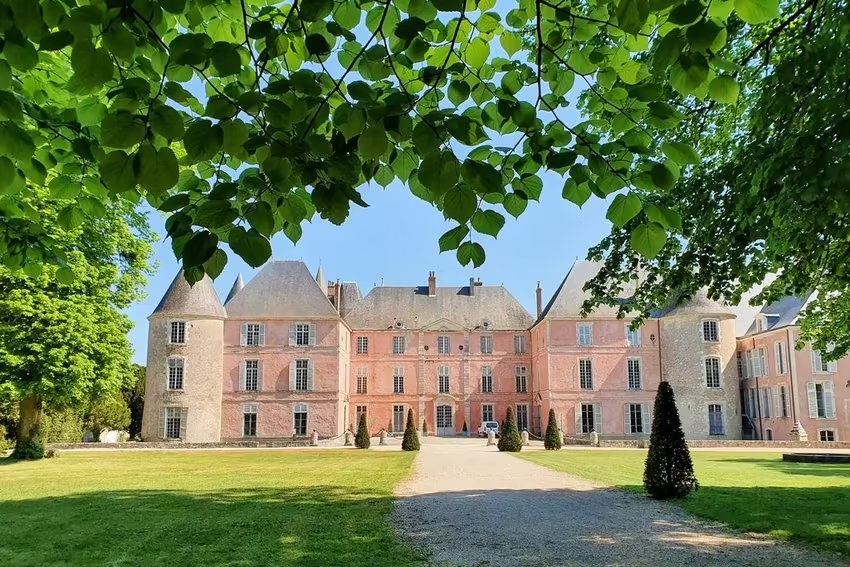
Around twenty kilometres west of Orléans, Château de Meung-sur-Loire was once the residence of the Bishops of Orléans. Nicknamed the « Château with Two Faces », it surprises visitors with its two contrasting façades: one reflects its medieval and defensive past, while the other reveals a more elegant architectural style, remodelled in the 18th century.
Inside, historic rooms, former kitchens and underground passages immerse visitors in the world of a grand seigneurial residence.
A little further along, Beaugency reveals another aspect of Loire Valley heritage through its Château de Dunois. This former lordly residence takes its name from Jean de Dunois, a companion in arms of Joan of Arc and an important figure in the Hundred Years’ War.
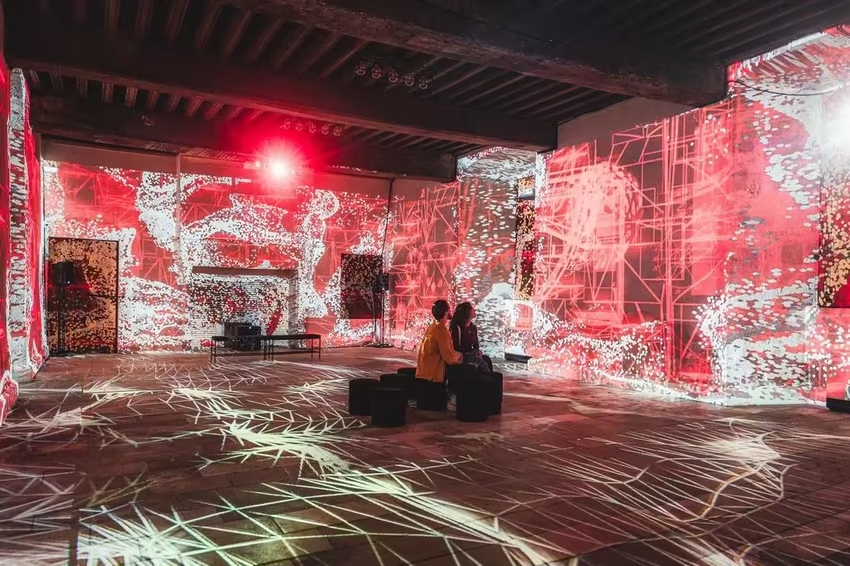
As night falls, Château de Beaugency is transformed, revealing an entirely different side of its character. Its history-laden walls are illuminated, its façades come to life and carefully designed lighting enhances every stone of this magnificent monument.
The interplay of light, colours and luminous atmospheres creates a fascinating spectacle, inviting visitors of all ages to discover the château in a completely new way.
Throughout the experience, visitors can take their time admiring the architectural details, appreciating the beauty of the surroundings and being captivated by the unique atmosphere. Every space offers a new sense of wonder, creating the impression of travelling through the centuries.
LUMINISCENCE
Heritage illuminated through artistic creation
What if we could rediscover a historic monument through the eyes of today’s artists?
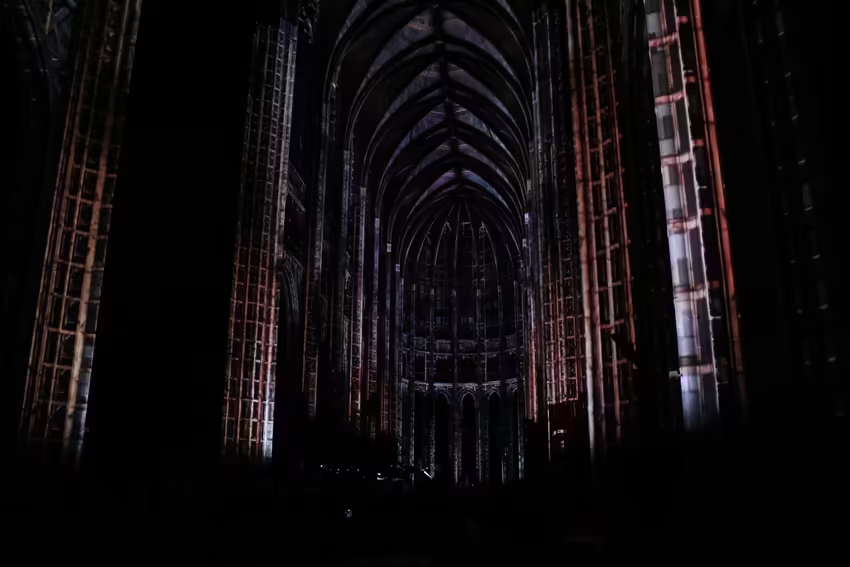
With LUMINISCENCE, Sainte-Croix Cathedral becomes the setting for an immersive artistic experience, where architectural heritage enters into dialogue with digital technologies and contemporary creativity.
Through spectacular large-scale video mapping, the building’s walls, vaults and pillars are transformed into an immense canvas of light. The projections follow the contours of the Gothic architecture, reveal its intricate details and reinvent its perspectives, while music accompanies this extraordinary visual transformation.
Far more than a traditional sound-and-light show, LUMINISCENCE offers a new way of experiencing heritage. The aim is no longer simply to admire a monument or recount its history, but to create a dialogue between the building and the artistic expressions of our time.
This encounter between historical legacy and artistic innovation reminds us that heritage is not frozen in the past. It remains a living source of inspiration, capable of reinventing itself and creating new emotions.
A Destination
Where Culture Meets the Art of Living
Understated yet full of discoveries, Orléans deserves far more than a brief stop along the route to the Loire Valley châteaux. Its architectural heritage, its history closely intertwined with Joan of Arc, its riverside landscapes and vibrant cultural scene come together to create a destination with many different facets.
Whether for a weekend getaway or a longer stay, the city invites visitors to combine cultural sightseeing, leisurely walks along the river and gastronomic discoveries.
The Orléans Tourist Office offers a wide range of activities to explore the city and its surrounding area.
Highlights include guided tours through the historic streets, opportunities to discover the city’s heritage, boat trips along the Loire to admire the beautiful landscapes of the Loire Valley, as well as a variety of cultural and leisure activities.
Plenty of ways to make the most of Orléans and discover its many treasures from a different perspective!
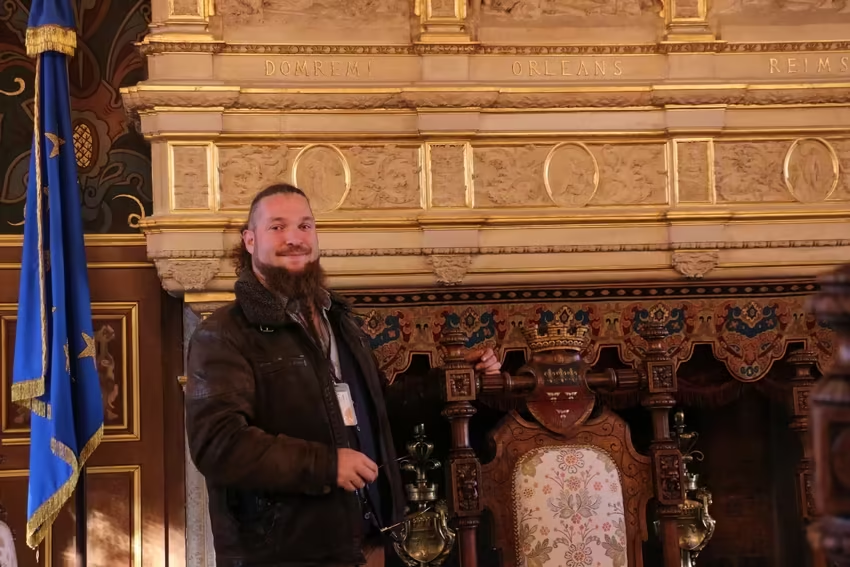
Interview|专访|Interview : Wendy
Photo|照片|Photo :Charles
Rédaction|编辑|Editorial:Hervé
Magazine digital|数字杂志|Digital Magazine
Airs de Paris : 2026 Autumn & winter :
https://airsdeparis.com/publication/airs-de-paris-2026-autumn-winter/

Fashion 2026 – Autumn & winter :
https://airsdeparis.com/publication/airs-de-paris-fashion-2026-autumn-winter/

Kiosque|杂志亭|Newsstand
Édition papier |纸质版 |Print Edition
https://www.journaux.fr/produits/presse/F%C3%A9minin-6/Airs-de-Paris-280044

Abonnement|订阅|Subscription
https://www.uni-presse.fr/abonnement/abonnement-magazine-airs-de-paris/
