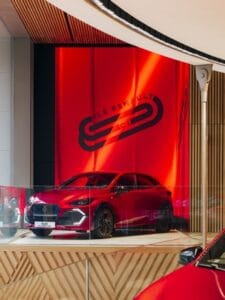
Some addresses are more than places. They are memories, open stages, promises.
53 Avenue des Champs-Élysées is one of them. And Renault, both a guardian of its past and a messenger of the future, is now writing a new chapter here—light, bold and visionary—precisely where its story began.
Here, the automobile is no longer simply a machine. It becomes a narrative, a sensation, a shared cultural experience. Renault has transformed this iconic address into a poetic space dedicated to mobility: a place where metal, innovation and creativity soften into something accessible, welcoming visitors who cross its threshold with curiosity and imagination.
History whispers through the walls. One can almost glimpse the elegant silhouette of Louis Renault in 1910, the vibrant energy of the 1960s at the legendary Pub Renault, and the lively conversations that once filled Atelier Renault at the turn of the century.
Today, after three years of transformation, the doors reopen onto a luminous setting of curves and light, where design breathes and vehicles seem almost in motion—even when standing still.
But this place is not only meant to be admired.
It is meant to be experienced.
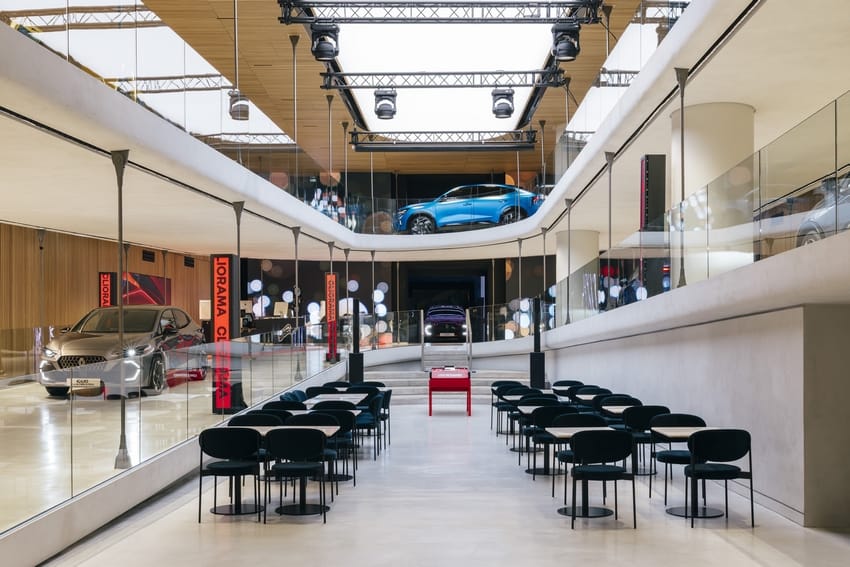
An Urban Living Room
More than a flagship store, Le Défilé Renault has been conceived as a contemporary gallery, where pop culture meets engineering. Here, visitors can admire the elegant line of a car’s bodywork, attend a film screening, listen to a discussion about the city of tomorrow, or simply enjoy a coffee while watching life unfold along the world’s most famous avenue.
Because ultimately, this is about emotion. About a conscious effort to bring pleasure, memory and human connection back to the heart of the automotive experience.
In this space—designed like a luminous urban loft—Renault does more than present vehicles. The brand offers a perspective, an inspiration, a moment suspended in time.
A true living space, the venue embodies a distinctly French art de vivre that blends heritage with boldness, beauty with function. It is no longer simply about displaying objects, but about awakening the senses: the warmth of materials, the fluidity of forms, the excitement of innovation.
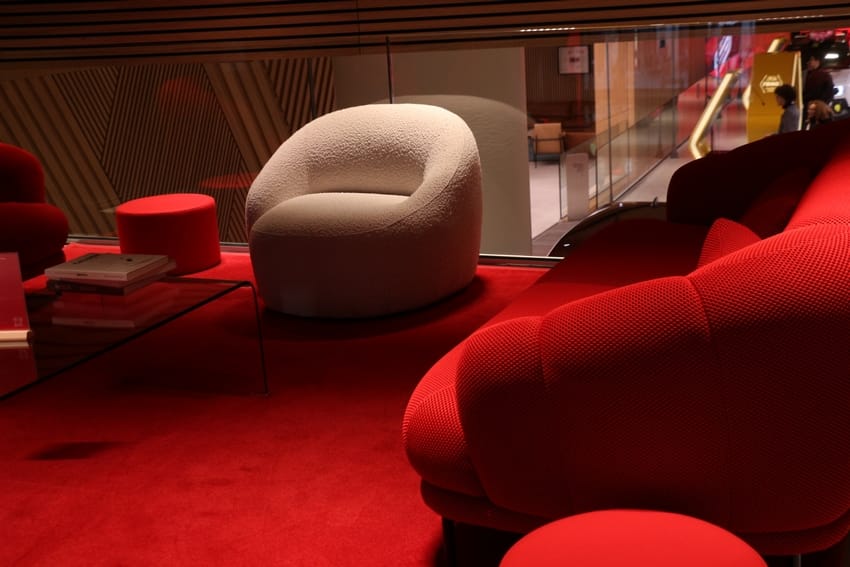
Renault invites visitors to a modern stroll, encouraging them to write, if only for the duration of a visit, their own story within these walls filled with history and spirit. Because perhaps the future of the automobile does not begin only on the road.
Perhaps it begins here, on the pavement of the Champs-Élysées, in the quiet murmur of a silent revolution: the rediscovery of pleasure.
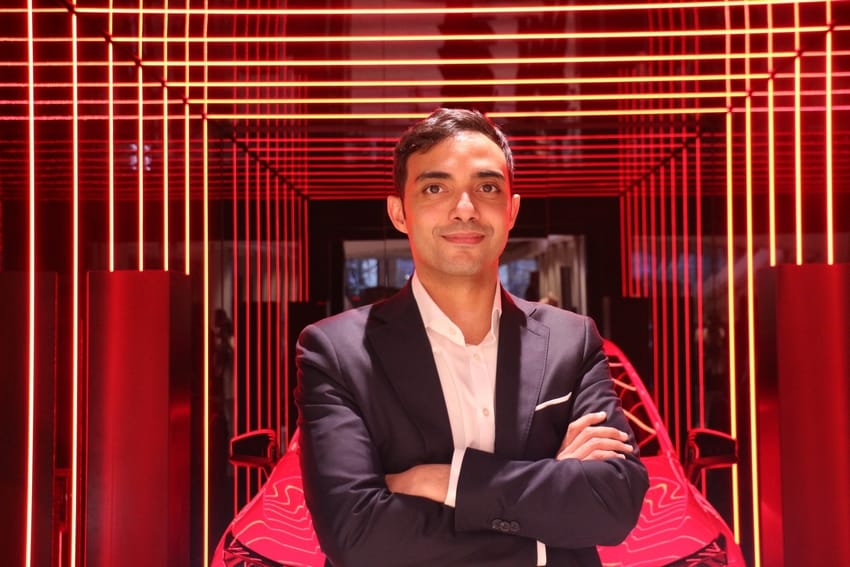
Ilyass Charki, Director of the flagship store Le Défilé Renault – The Carwalk, welcomed us into this emblematic venue—a true showcase of creativity and experience—to share its vision and spirit.
A Conversation with
Ilyass Charki
Why did Renault completely rethink this iconic address?
Roughly every twenty-five years, Renault makes the bold decision to dismantle what exists and imagine something entirely new. With each transformation, the venue changes its name, marking a new chapter in its history.
Before Le Défilé Renault, the space was known as Atelier Renault. It was much more than a restaurant. Cars were already displayed there, and it had become a true Parisian institution. International tourists, French visitors and Parisians naturally stopped by when walking along the Champs-Élysées.
With every evolution, Renault has embraced a new identity—one that reflects both the spirit of the place and the era in which it exists.
Why the name Le Défilé Renault?
The name is directly inspired by the architecture. During the architectural competition, the winning project featured a spectacular suspended structure. It touches neither the walls nor the floor: it hangs from the ceiling and appears to float within the space. This staging immediately evoked the idea of movement—of a procession, almost a parade.
We also played with the codes of fashion. In English, the concept is called The Carwalk, in reference to the catwalk. In French, Le Défilé Renault felt natural: a parade of cars imagined like a fashion show.
The venue is also fully privatizable. It hosts Renault exhibitions and events, but can also be made available to players from the worlds of fashion, design, culture or luxury. If necessary, the vehicles can be removed to create a completely open space. This flexibility makes Le Défilé Renault a hybrid venue, open to many creative possibilities.
In what way does this space go beyond a traditional showroom?
It is first and foremost an exhibition space, but visitors can also purchase a vehicle, test drive it and even take delivery here.
Le Défilé Renault is also a place for dining, with a café, a restaurant and a large terrace overlooking the avenue. With nearly one hundred outdoor seats, it is one of the largest terraces on the Champs-Élysées.
We also have a lifestyle boutique offering miniature cars, clothing, watches, skateboards and other objects that extend far beyond the automotive universe.
Finally, it is a true event venue. The central space, known as the Agora, regularly transforms into a cinema with weekly screenings. DJ sets, talks, conferences and cultural gatherings are also part of the program.
Le Défilé Renault is designed as a living space in constant motion, where culture, mobility and experiences intersect.
What does Renault’s continued presence on the Champs-Élysées symbolize?
Renault is a popular brand, and there is no more symbolic place than the Champs-Élysées to meet the public—not only tourists, but also the many French visitors who still come here.
After nearly three years of transformation, the challenge was to make the brand’s renewal visible. By choosing to remain on the Champs-Élysées—while many other brands have chosen to leave—Renault clearly affirms its desire to stay close to its public and remain faithful to its DNA.
Is it important to remain on the Champs-Élysées?
It is a popular and accessible place. Everyone comes to the Champs-Élysées.
The avenue is becoming increasingly premium, which is a positive development. But it has also historically been a place where popular French brands and national industrial players have been present.
This is why we wanted to stay.
The venue will welcome nearly one million visitors each year, which is quite remarkable. In a way, it is like a motor show that takes place every day. We are open seven days a week, from 10 a.m. to 10 p.m., 365 days a year. This constant accessibility and high level of attendance make it an exceptional location.
What philosophy guides the cultural programming of Le Défilé Renault?
Our core business remains the automobile. The space was designed to showcase cars within a strong architectural setting. But we also wanted to go further.
The guiding theme of the current cultural program is love—which is also the meaning of the name Clio. Whether through cinema, DJ sets, photography exhibitions or cultural events, this theme runs subtly through everything we do.
Even when we host electronic music evenings, emotion and human connection remain central.
The goal is to create a completely different experience. In an era dominated by digitalisation and artificial intelligence, people increasingly seek real, tangible experiences. That is precisely what we offer here: experiences, not simply a place to pass through.
For us, that is what retail means today.
How does Le Défilé Renault reflect the brand’s international dimension?
Renault is the most widely sold French car brand in the world. This international dimension is naturally reflected here. We welcome visitors from the United States, Brazil, China, Korea, Japan, Turkey, India and many other countries where Renault has long been established.
We recently announced our strategic roadmap, International Game Plan 2027, which involves a strong product offensive across several international hubs.
We already see this in South America with the Boréal and the Kardian, in Turkey with the Duster, and in Korea with the Koleos. Renault remains a deeply international brand, and this is a major strategic ambition for the group.
How does this international vision align with environmental challenges?
Our product strategy today is clearly focused on electrification. We manufacture vehicles locally in France using short supply chains. Batteries are produced locally, suppliers are located within roughly 300 kilometers of our factories, and recyclability rates are very high.
Take the electric Scénic, for example—our largest electric vehicle. For us, it is essential that sustainability be integrated from the design phase and throughout the entire distribution chain.
Renault often speaks about “cars for living.” What does that mean?
“Cars for living” combine several essential dimensions.
First, design. We have placed strong emphasis on aesthetics, as seen with models like the Clio.
Then technology and sustainability. Renault is the leader in electric vehicles in France, one of the leaders in hybrid technology and a major European player in HEV systems.
Beyond powertrains, we develop human-centric technologies: intuitive, easy to use and designed to meet real needs while making everyday life easier.
At Renault, we aim to strike a balance between design, technology and sustainability.
Is direct contact with the public still essential in the digital age?
Absolutely. Renault remains deeply attached to its distribution network and dealerships, and we continue to participate in major international motor shows.
Being here on the Champs-Élysées allows us to stay in direct contact with visitors—whether they are Parisians, French visitors or tourists from around the world. That proximity is fundamental to the brand.
What role do driver-assistance technologies play at Renault?
Many advanced technologies are already integrated into our vehicles: lane-centering systems, adaptive cruise control and other driving aids. Personally, when I drive to Lille on the motorway, the car practically drives itself.
That said, our strategic priorities remain electrification, sustainability and the circular economy. Safety remains a fundamental pillar, but today electric mobility and environmental responsibility are clearly at the heart of Renault’s priorities.
Interview: Wendy
Written by: Hervé
French Version :
https://www.airsdeparis.fr/art-de-vivre/le-defile-renault-un-hub-dexperiences/
Chinese Version:
https://mp.weixin.qq.com/s/oSDRkqyecmbnd-Dcqu8GyQ
Digital magazine
2026 – Spring
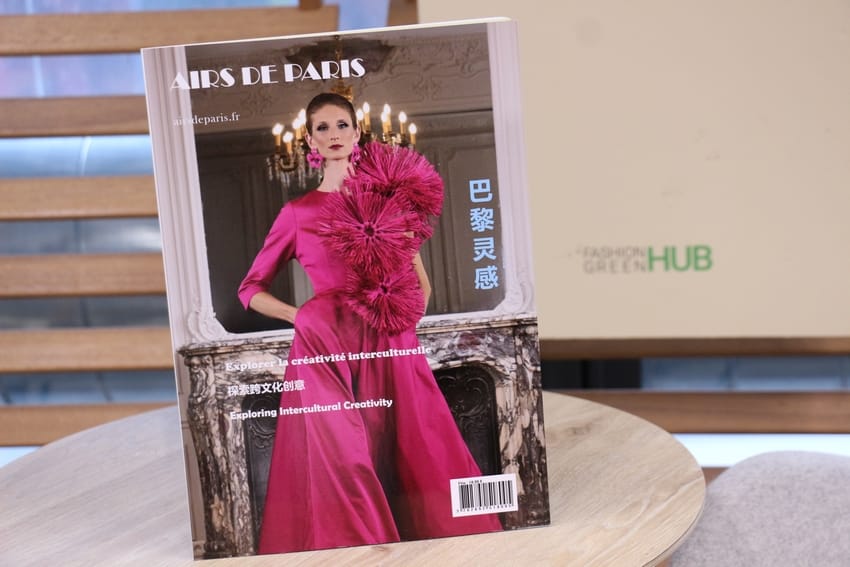
https://www.airsdeparis.fr/publication/airs-de-paris-2026-spring/
FASHION : 2026 Spring & Summer
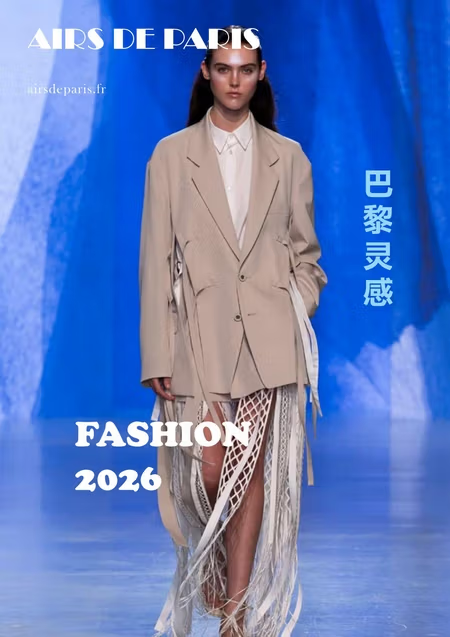
https://www.airsdeparis.fr/publication/airs-de-paris-fashion-2026-spring-summer/
Printed magazine

https://www.journaux.fr/airs-de-paris_mode-beaute_feminin_280044.html
Subscription worldwide
