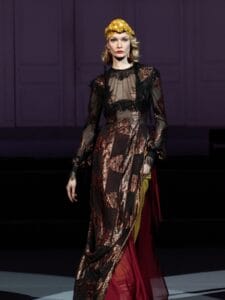
On January 27, at the height of Paris Fashion Week, Julien Fournié unveiled a Haute Couture collection that resonates unmistakably as a manifesto.
A question lingers in the air, almost provocatively: what has happened to fashion?
Has it lost its sense of impertinence, extravagance, and visual confrontation—the very force that appearance is meant to generate? Under the weight of political correctness and socially sanctioned norms, has creative expression dissolved into a form of reassuring, yet perilously silent, uniformity?
Standing deliberately against this widespread alignment—one that permeates both aesthetics and societal discourse—Julien Fournié asserts independence.
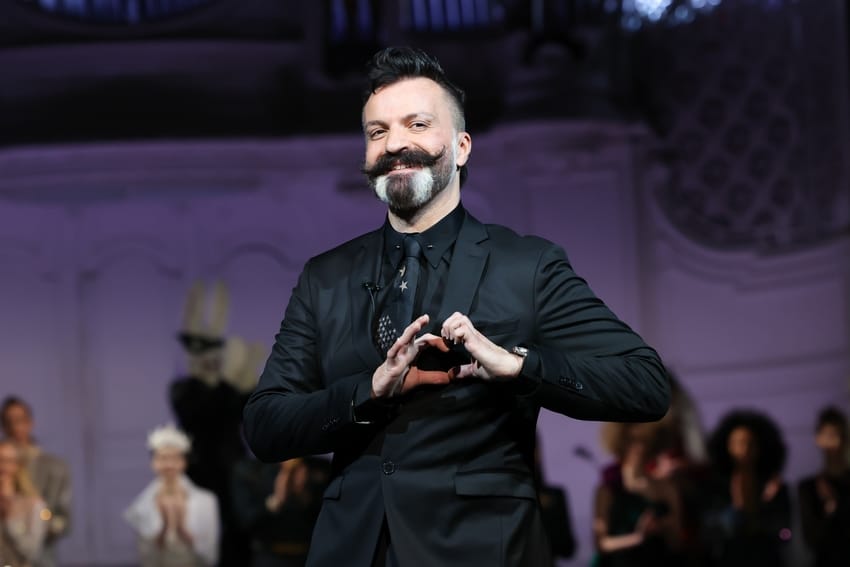
For him, Haute Couture answers neither algorithms nor consensual trends. It exists as an art form in its own right, shaped by mastery of textiles, precision of gesture, and above all, by the absolute autonomy of a living creator—free to deliver, season after season, a radically renewed vision.
“Living Together”
as Raw Material
The inspiration behind this collection is deeply personal. It reaches back to the years when Ju-lien Fournié travelled daily from Paris’s northern suburbs into the city centre.
In trains, on streets, and through professional encounters, he observed individuals with fiercely asserted identities, sometimes excessive, always singular.
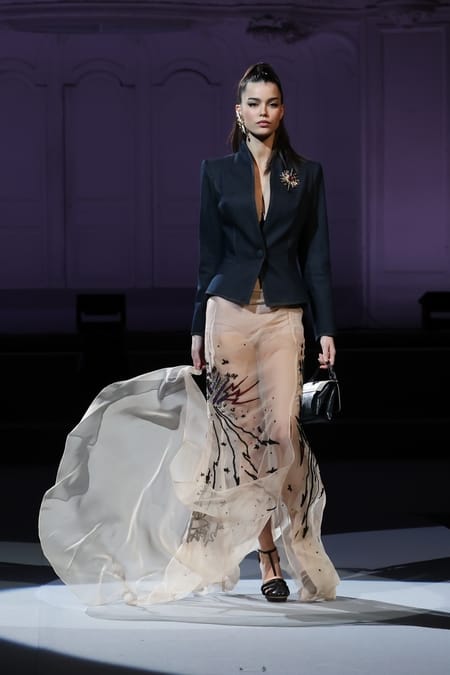
They were personalities who embraced difference without renouncing dialogue, celebration, or friction with others.
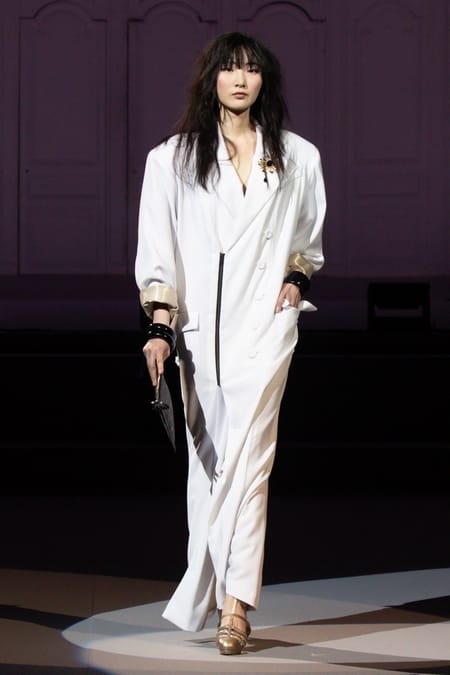
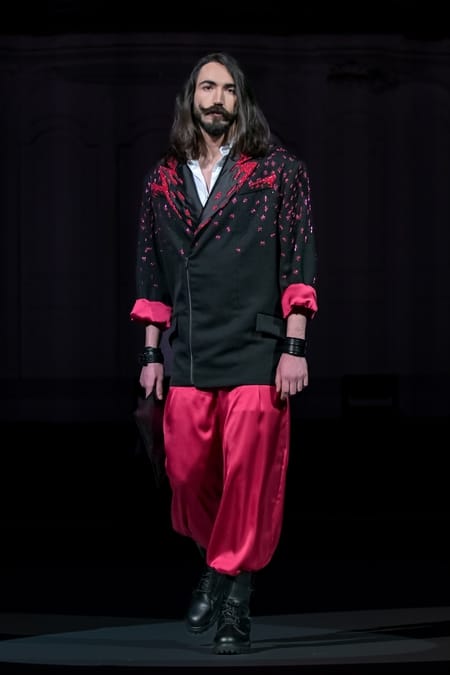
From this human energy emerges a compelling gallery of characters: delinquent figures with subverted codes; fantastical princesses wrapped in spellbinding elegance; new romantic icons infused with pop culture; and deliberately off-kilter bourgeois silhouettes, refined, bohemian, vintage, and profoundly universalist.
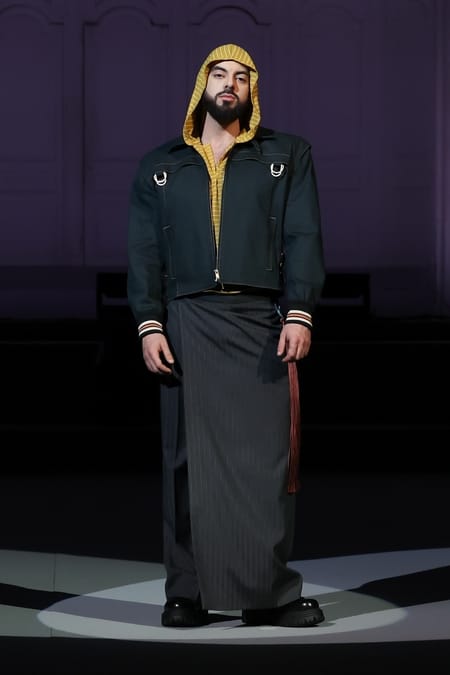
In the world of Julien Fournié, women and men engage in a genuine “war of charm.” Each bor-rows, twists, and subverts the codes of the other, asserting a style that is unapologetic, confi-dent, and uncompromising.
The silhouette becomes both a political and poetic playground, where identity is constructed through hybridisation rather than opposition.
Embroidery Without Nostalgia
Embroidery is opulent, yet stripped of decorative nostalgia.
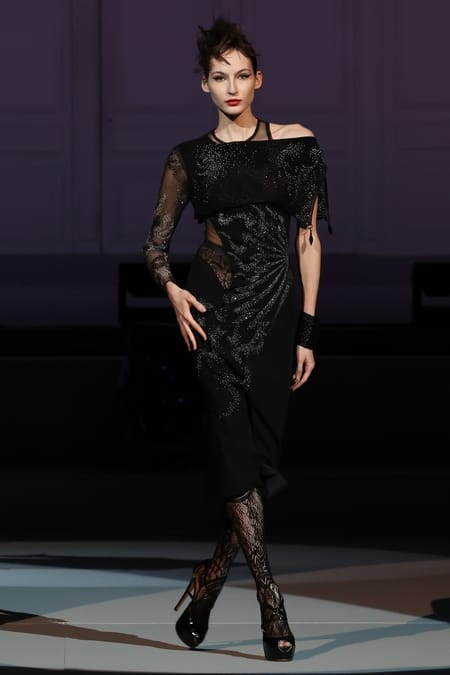
There is no revisiting of the Second Empire here.
Instead, couture absorbs graffiti, manga, genre cinema, and contemporary urban references. Luxury does not look backwards—it metabolises the present.
When Craft Becomes Subversion
Julien Fournié dismantles any hierarchy between tradition and innovation. Silks converse freely with experimental textiles; ancestral savoir-faire is reactivated through radical, unexpected forms.
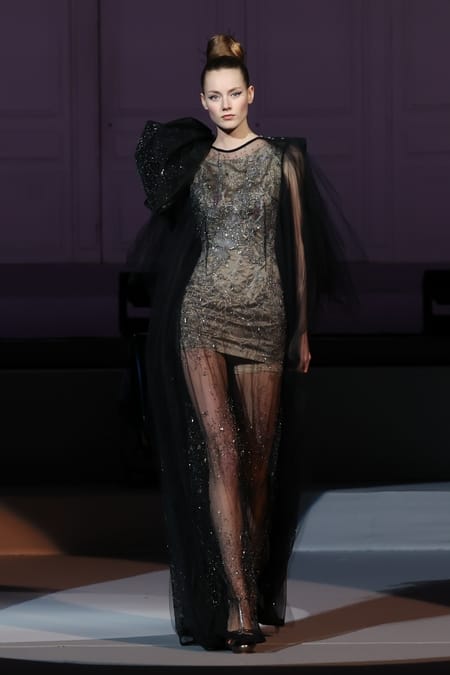
The couturier collaborates with sculptor André Tognotti, who carves Carrara marble into crowns—or transforms bra cups into bridal ornaments, audaciously détourning symbols of the body and the sacred.
He also foregrounds a new generation of artisans, notably embroiderer Amman Shaikh, whose ability to divert traditional Indian techniques into bursts of coloured crystal compositions bor-ders on insolent virtuosity.
Misfits as Manifesto
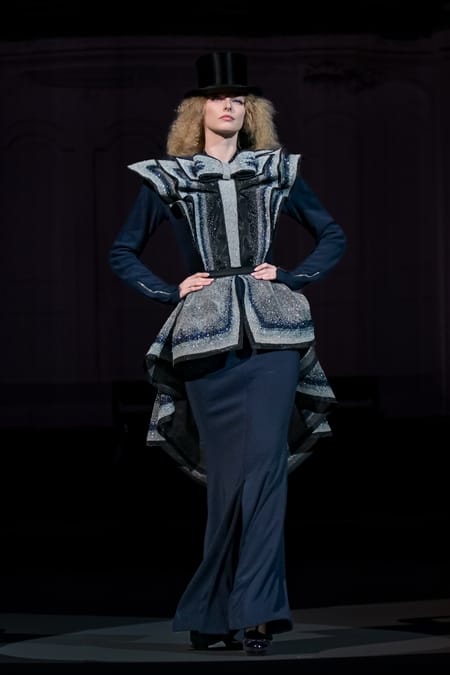
This collection is inhabited by Misfits—silhouettes that reject ambient conformism, impose their own language, and affirm a powerful personal expression, deliberately moving against reassuring norms.
In Julien Fournié’s universe, couture does not seek to soothe. It questions. It provokes. It ele-vates.
Because while norms may reassure, difference creates legends.
Text: Hervé
French Version:
https://www.airsdeparis.fr/mode/julien-fournie-la-couture-comme-acte-de-resistance/
Digital magazine
2026 – Spring
https://www.airsdeparis.fr/publication/airs-de-paris-2026-spring/
FASHION : 2026 Spring & Summer
https://www.airsdeparis.fr/publication/airs-de-paris-fashion-2026-spring-summer/
Printed magazine

https://www.journaux.fr/airs-de-paris_mode-beaute_feminin_280044.html
Subscription worldwide
