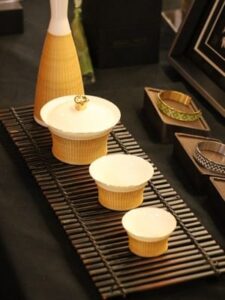
Nicolas Deschamps has just completed the production of five films dedicated to traditional Chinese art, which will soon be broadcast on TV5MONDE and Museum TV. These films offer an immersive journey into the immense diversity of China’s artistic traditions, inviting viewers on a visual voyage into the heart of a millennia-old culture.
As a producer at Realworks, Nicolas Deschamps has succeeded in capturing the essence of this cultural heritage, paying tribute to the beauty and depth of Chinese art. Airs de Paris had the opportunity to meet him and discover the inspirations behind this captivating project.
An Interview with
Nicolas Deschamps
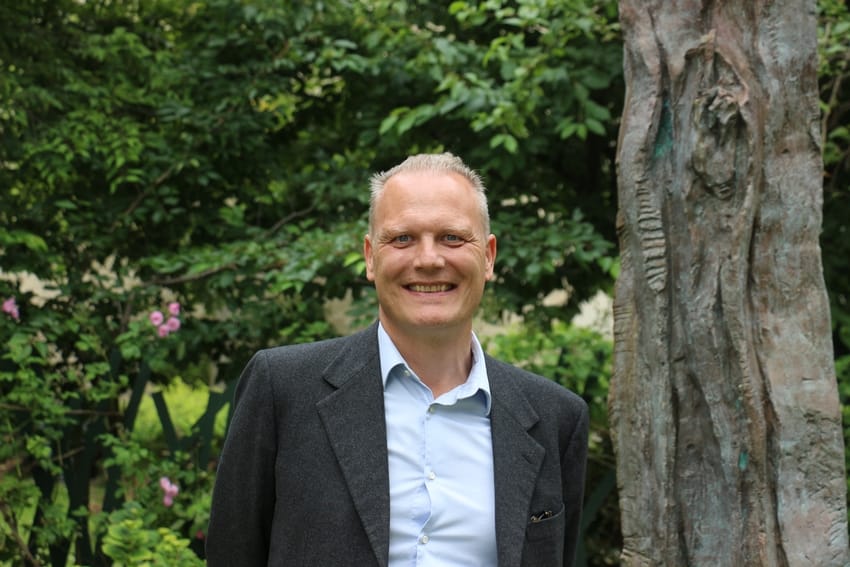
Could you tell us a little more about your films on China?
We spent an entire year filming in several of China’s emblematic cities: Changsha, Tianjin, Nanjing, Beijing and Chengdu. At each location, we met leading masters in disciplines such as calligraphy, painting and ceramics. These films introduce viewers to the Chinese vision of art, rooted in a millennia-old history and an exceptionally rich tradition.
Why are you interested in China?
I come from a family of artists, and my interest in China has continued to grow over the years. To date, I have made 15 films devoted to this country, which reflects my fascination with its cultural and artistic richness.
Traditional Chinese art is imbued with a captivating sense of mystery. However, from a European perspective, it can sometimes be difficult to fully grasp its subtleties. It requires explanation, guidance and, at times, a genuine effort to understand its depth and meaning.
Through film, it becomes possible to reveal and share these fascinating aspects of Chinese culture with a wider audience. Making films about China has also allowed me to change my own perspective. Every film I create is personally transformative.
It leads me to discover knowledge that I did not previously possess, and the creative process enriches me. I absorb this knowledge, transform it into a universal story, and then share it with a wider audience. This is my way of better understanding China and, in my own small way, helping reveal its cultural subtleties to the world.
How do you choose your film subjects?
We spent an entire summer meeting art masters, one after another. This research phase was essential in helping us understand their practices, their stories and their individual worlds. We eventually chose to focus on five masters, who are also genuine cultural ambassadors for their respective regions.
In China, every region has its own cultural identity, which can be radically different from that of another. Being in the Chengdu region, for example, is not the same as being in Nanjing or Jingdezhen.
These places allow us to immerse ourselves in unique cultures, each with its own characteristics, stories and way of life.
China is not a uniform nation. It is made up of a mosaic of regional identities, and it is precisely this diversity that fascinates us and that we want to bring to light through our films.
Is French television interested in China?
Increasingly so, I believe. China continues to be a fascinating mystery. We have spent too much time turning our backs on it, even though it has so much to teach us including about our own history.
To illustrate this, let me share a personal story. When I was growing up in Normandy, a region deeply marked by wartime bombing, my grandfather used to tell me stories. At the time, he lived just below a Chinese museum that was completely destroyed by the bombing. After the tragedy, he collected Chinese objects, including porcelain pieces, some of which are still in my home today.
These objects, broken by war, have always intrigued me. They continue to make me wonder about their origins, their history and what they represent.
This memory has had a profound impact on me. It made me understand that, although our cultures and histories may differ, there is a shared heritage that connects us. This heritage, both tangible and intangible, must be preserved, studied and, above all, shared with as many people as possible.
How do you view China?
Every time I visit China, I experience a genuine emotional shock. What touches me deeply is the kindness and gentleness of the people, as well as the immense cultural richness that emanates from the country.
There is a great deal of humility among the Chinese. They do not necessarily put their culture on display, so discovering it requires genuine effort. You have to search, ask questions and take the time to understand. It requires patience, but that is also what makes every encounter and every discovery so rewarding.
The more I discover China, the more I realize how little I know when faced with thousands of years of culture waiting to be encountered and shared.
I am also deeply moved by China’s history and by the hardships it has endured. The destruction and looting of the Old Summer Palace, for example, deeply affects me. This place, which was looted and destroyed, represents an immense cultural loss—comparable to what we would feel if Versailles had been destroyed.
It illustrates how, for too long, we viewed China simply as a land to be exploited, without recognizing the depth of its culture and refinement, which have so much more to offer than commercial goods.
What is your next project?
We are currently developing an exciting project, because creativity in China goes far beyond fashion. There is an extraordinary cultural richness that deserves to be explored through film.
We are still in the development phase, and our main objective is to find a compelling story that will captivate audiences.
We are exploring collaborations with fashion designers who incorporate traditional Miao embroidery into their collections. At this stage, we are looking for an original narrative that can highlight this fascinating fusion of tradition and modernity.
The project is moving forward, but there is still much to do. I would really love to see it take shape.
Interview: Wendy
Written by: Hervé

Magazine digital – Fashion

https://airsdeparis.com/publication/airs-de-paris-2024-mode-2/
Magazine imprimé

https://www.journaux.fr/airs-de-paris_mode-beaute_feminin_280044.html
Abonnement dans le monde
