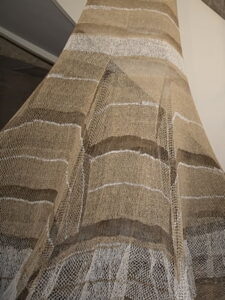
For Heyaner, fashion goes far beyond the simple design and production of clothing; it is a true quest to explore the meaning of life. Over the past thirty years, she has developed a circular micro-ecosystem for reusing natural textiles through her brand, Mengjinongga.
By giving new life to fabric scraps from her first brand, B-Y-B-Y, Heyaner sends them to villages in Guizhou, where talented women transform them into new textiles. This initiative not only preserves traditional craftsmanship, but also generates income for the village women, providing them with a new source of dignity and independence.
Ambassador Yang Xinyu, a friend of Heyaner and a representative of the Chinese delegation to UNESCO, shares this passion for traditional craftsmanship. She has supported Heyaner’s work from the very beginning, and together they have travelled to remote regions in search of forgotten artisans, helping to revive ancestral skills and traditions.
Airs de Paris magazine had the opportunity to meet them in Paris, where they shared their experiences and discussed the journey behind this remarkable initiative.
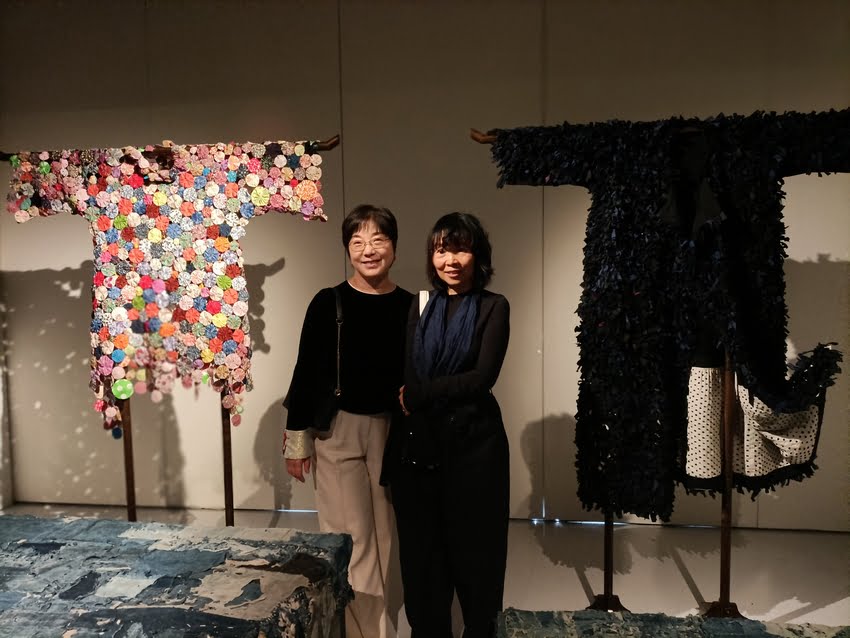
Did you accompany Heyaner throughout the process of creating this ecosystem?
Yang Xinyu:
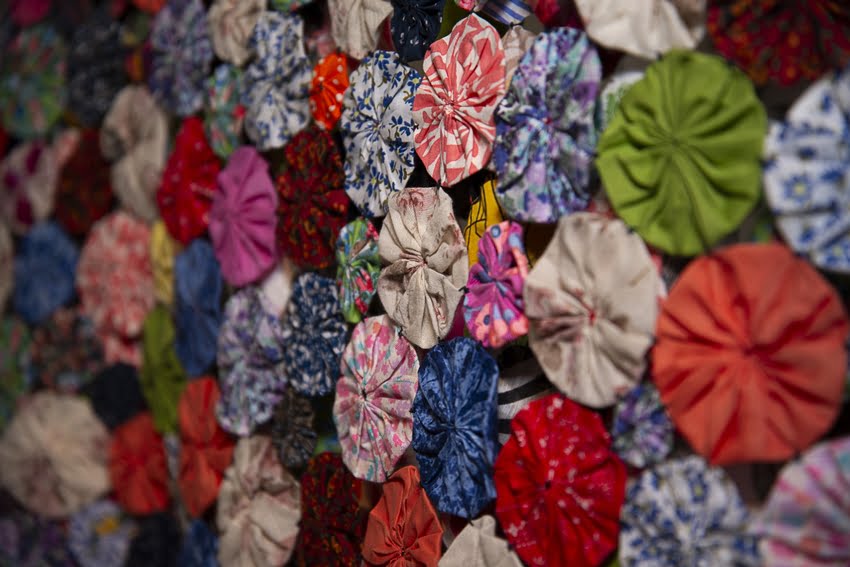
It was a gradual process of developing an idea. At first, Heyaner felt deeply torn because she owned a garment factory but did not know what to do with the cut fabrics and leftover scraps. Little by little, ideas began to emerge, and she started bringing these materials back to the villages of Guizhou, where they could be turned into clothing and accessories using the traditional craftsmanship of local women.
For example, the scarf I sent to the Director-General of UNESCO was made from these fabric scraps, woven together in a way that not only gave them a new life, but also transformed them into a unique form of artistic expression. It also created employment opportunities for the women in the villages.
At the same time, Heyaner restored forgotten looms. The villagers reassembled the scattered machines, allowing everyone to relearn the art of weaving.
I had the opportunity to travel with her and visit several of these workshops. It was truly impressive to discover the extraordinary variety of patterns they created. She also dyed the fabrics in a wide range of colours, using entirely natural materials such as flowers.
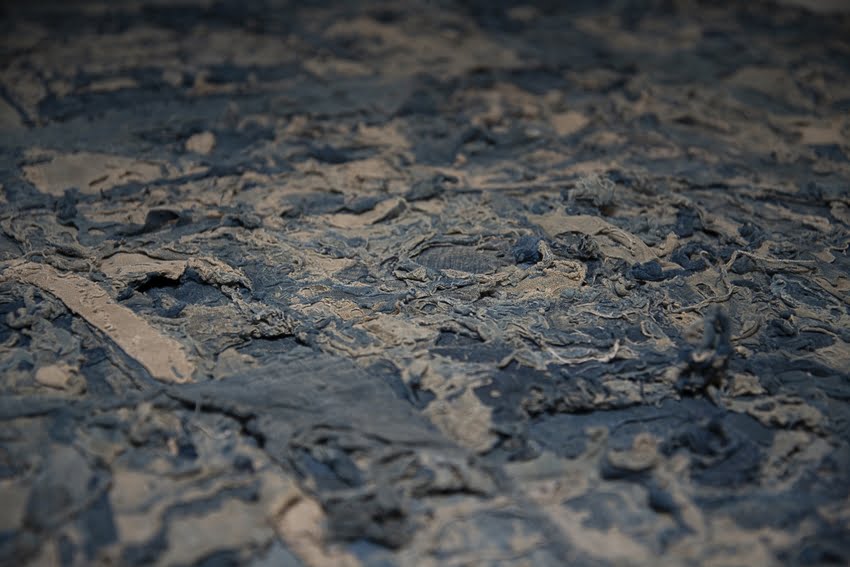
On one occasion, we visited a dye workshop specializing in blue textiles. The fabrics were laid out to dry in the sun, and all the materials and processes were completely natural and handmade. These creations are truly fascinating.
It is remarkable to see how these women, living deep in the mountains, are able to preserve and pass on such a rich heritage. Within this ecosystem, they are preserving their traditional skills while finding the perfect balance between craftsmanship, work, and earning an income.
Take the example of a woman who dreamed of buying silver jewellery for her daughter’s wedding, but whose family could not afford it. Later, she gradually began earning money by weaving fabric scraps. Little by little, she saved her earnings until she was finally able to buy a silver set for her daughter.
In this way, she was able to make up for the fact that her own mother had not been able to give her daughter jewellery for her wedding. Thanks to the new ideas and methods introduced by Heyaner, she finally fulfilled that dream forty years later.
Could you tell us about your experience of creating this ecosystem?
Heyaner:
It is true that, at the beginning, it is like a seed that gradually grows, sprouts, and eventually becomes a forest. This transformation is not limited to a simple quantitative change; it can also represent an intellectual, cultural, or emotional expansion.
Throughout my creative process, I have a clear vision of my goals. What began as nothing more than an idea has gradually evolved into an ecosystem capable of surviving and thriving on its own. Every step of this journey is essential, as each contributes to building a sustainable and harmonious environment in which every element plays a crucial role in maintaining the overall balance.
How do you work with these women?
Heyaner:
My first encounter with these women dates back thirty years. At that time, Beijing was already very modern, and reaching the walled villages required a long journey. In the 1990s, transportation was not very convenient; we had to walk or use tricycles or ox carts to reach these remote places. However, as long as there were people living somewhere, we always found a way to reach even the most isolated areas.
These villages were still almost completely untouched. Discovering them felt like travelling back in time. The contrasts were still very visible, and these communities had been largely untouched by modernization. Their way of life and their memories were passed down from one generation to the next.
Even after roads were built into the villages, some women remained deeply attached to their traditions and were willing to pay for traditional weaving materials. When I asked them why they wanted to weave their own fabric, they explained that the textiles they made were more comfortable to wear and felt more pleasant against their skin.
I therefore began talking with them, learning their techniques and sharing my own ideas.
Today, each village has a group of women engaged in handicraft activities, and we provide them with fabrics. When they receive these materials, their enthusiasm is palpable, because they rarely have access to such fabrics and find them particularly exciting and fun to work with.
These women love working with their hands and are willing to create all kinds of handicrafts in their spare time, as well as between their farming activities. I encouraged them to be spontaneous, allowing them to choose fabrics at random and let their creativity flow freely. They might make small animals, for example, filling them with cotton or using finer materials.
How has their way of life affected you?
Heyaner:
I was deeply touched by their way of life. Some of these women pray in order to communicate with their ancestors. It is a deeply spiritual process, even though we may not understand their language. This communication provides them not only with guidance and protection, but also with the strength to overcome the challenges of everyday life.
By connecting with their ancestors, they feel their presence and receive invaluable support in their lives. This form of dialogue, although sometimes difficult for outsiders to understand, has a profound impact on their existence.
For me, this experience was transformative. I witnessed how their way of life, rooted in centuries-old traditions, gives them an inner strength and resilience in the face of adversity. Their ability to draw upon the legacy of their ancestors allows them to navigate life’s challenges with a wisdom that transcends generations.
As I came to know these women and their culture, I realized that this connection with the past is not limited to rituals; it shapes their identity and their vision of the world. Their respect for their ancestors and their desire to keep this communication alive enrich not only their own lives, but also those of the people around them.
This experience has profoundly stayed with me and broadened my understanding of the way cultural roots can influence our everyday lives.
Do you feel a strong connection with them?
Heyaner:
This experience not only profoundly changed my life, but also created an unbreakable bond between me and my own ancestors. I felt an intense connection with them, an awakening that allowed me to understand more deeply my relationship with my roots. This connection has helped me better understand who I am and has given me strength and inspiration in my everyday life. It goes beyond cultural heritage; it is an emotional bond that enriches my understanding of myself and provides me with invaluable support.
When the members of the community, dressed alike, sang ancestral songs, danced, and shared moments together, I could not help but say to them, “Thank you all. I wish so much that I could be part of your group.”
I truly felt guided. A profound emotion came over me, as though I were being reunited with a loved one. This sense of belonging gave me an incredible feeling of strength, because in the city, we are often simply individuals, confined to our own families. Here, I felt a powerful connection with the entire community.
I genuinely felt as though I was being guided. A profound emotion came over me, as though I were reconnecting with someone dear to me. This sense of belonging gave me tremendous strength, because in the city, we are often simply individuals, limited to our own families. Here, I felt a deep bond with the community as a whole.
Within this community, if one person encounters difficulties, the entire community comes together to help. One family’s concerns become everyone’s concerns. This profound sense of solidarity is deeply moving and reminds us of the importance of the bonds that unite us.
∼∼∼∼∼∼∼∼∼∼∼∼∼∼∼∼∼∼
Airs de Paris
en Kiosque
∼∼∼∼∼∼∼∼∼∼∼∼∼∼∼∼∼∼∼∼∼
06 / 2024

Magazine digital et imprimé :
https://www.journaux.fr/airs-de-paris_mode-beaute_feminin_280044.html
∼∼∼∼∼∼∼∼∼∼∼∼∼∼∼∼∼∼∼∼∼
Airs de Paris
Abonnement dans le monde
∼∼∼∼∼∼∼∼∼∼∼∼∼∼∼∼∼∼∼∼∼

https://www.uni-presse.fr/abonnement/abonnement-magazine-airs-de-paris/