
In Paris, on September 30, creators, designers, entrepreneurs, institutions and cultural figures from Chengdu and France came together around a shared conviction: creativity can become a space for dialogue between cultures.
Organized by Airs de Paris, Fashion Green Hub, and the Chengdu Fashion Industry Association, in partnership with the Press Association and Presse Insign 360 group, this gathering brought together worlds sometimes separated by geography, history or market practices, but brought closer by a shared focus on creativity, expertise, innovation and the transmission of knowledge.
It was not merely about presenting brands.
It was about taking the time to look, listen and understand.
From Chengdu to Paris, fashion thus became the starting point for a broader conversation: one that connects heritage with modernity, craftsmanship with innovation, memory with the future.
Culture as a Starting Point
Cultural transmission played a central role in the discussions.
In a message addressed to the participants, Yang Xinyu, China’s Ambassador to UNESCO, expressed her support for this initiative and highlighted the importance of transmitting, protecting and innovating around intangible cultural heritage.
Her intervention raised an essential question: how can a tradition be kept alive in the contemporary world?
Passing on heritage does not simply mean preserving gestures, patterns or techniques. It also means enabling them to continue evolving, engaging in dialogue with their time and finding new uses.

Time, Gesture and Material
Marc Bayard, Director of Research and Innovation at the French National Manufactures – Sèvres & Mobilier national, addressed the concept of Slow Made as a way of rethinking our production practices and our relationship with time.
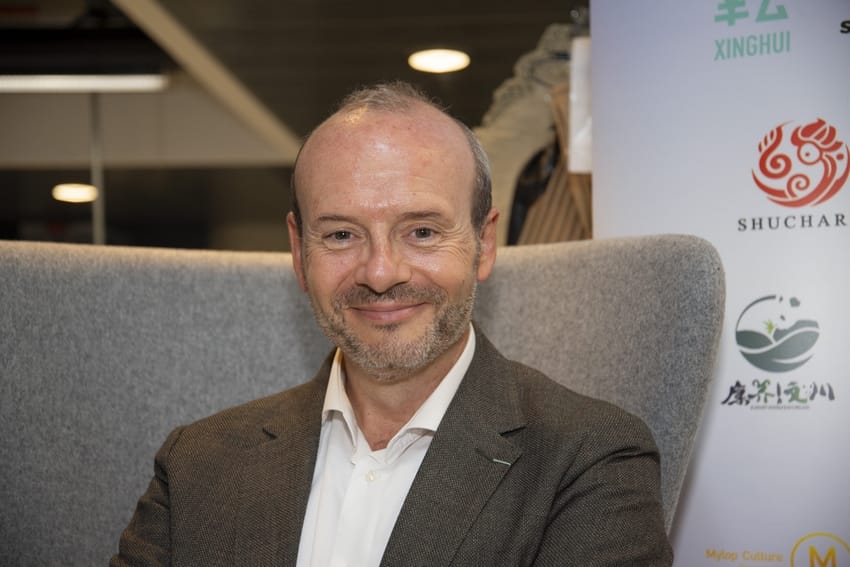
The challenge is not simply to “produce more slowly”, but to reconsider our relationship with time, materials, gestures, skills and the value of human work.
From this perspective, know-how cannot be regarded as a fixed heritage or merely preserved within a heritage-based approach. On the contrary, it constitutes a “living heritage”, capable of evolving, adapting to contemporary challenges and engaging in dialogue with innovation. The transmission of gestures and knowledge thus becomes a means of preserving a culture while allowing it to renew itself.
In this context, the Sustainable Practices Laboratory is part of this approach by providing a space for reflection, experimentation and research into new practices that can reconcile heritage preservation, contemporary creation and ecological transition. In particular, it encourages questioning the materials used, manufacturing processes and their environmental impact, but also the lifespan of objects, their maintenance, repair and restoration.
The true vitality of know-how may lie less in its mere preservation than in its ability to be reinterpreted, used, passed on and reinvented.
In a Changing World,
Culture as a Space for Dialogue
In a world marked by uncertainty, encounters between cultures take on particular significance.
Culture is not merely a means of representing an identity. It can also become a space for mutual understanding, dialogue and the building of lasting relationships.
It is from this perspective that Emmanuelle Peres, Director General of the Prospective & Innovation Foundation, shared her experience of international exchanges and cooperation between France and China.
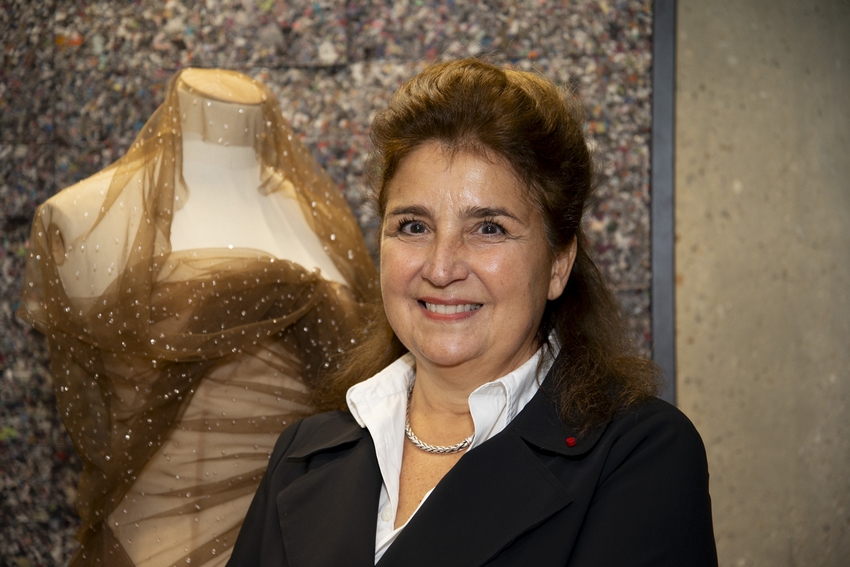
For several years, FPI has been developing initiatives to promote exchanges between France and China, notably through the Franco-Chinese Cultural Forums, organized since 2016.
These experiences remind us that cooperation between the two countries is not based solely on economic or commercial relations. It is also built through cultural, intellectual, artistic and human exchanges.
Fashion holds a unique place in this dialogue. It is visible, immediate and universal. But behind a silhouette, a material or an object, there is always a story, a territory, an aesthetic and a certain vision of the world.
What Fashion for Tomorrow?
This question was at the heart of the roundtable devoted to a particularly timely topic:
“What kind of fashion do we need for tomorrow?”
The sector is currently undergoing profound transformations. The roundtable brought together several complementary perspectives.

Lucas Thivolet Conde Salazar, General Director of Fashion Green Hub, addressed the transformations related to circularity and sustainable development.

Xiao Shuxin, Secretary General of the Chengdu Fashion Industry Association, presented the evolution of Chengdu’s creative ecosystem and its prospects.

Albane Forestier, Director of Education at IFA Paris, placed education at the heart of this transformation: future creators will not only need to know how to imagine, but also understand the environmental, technological and social issues that now surround every creative decision.
The question is therefore no longer simply: what do we want to wear?
It becomes: what kind of world do we want to help create through what we design, produce and consume?
Chengdu x Paris
蓉尚巴黎·链动全球
2026成都 – 法国供需对接会
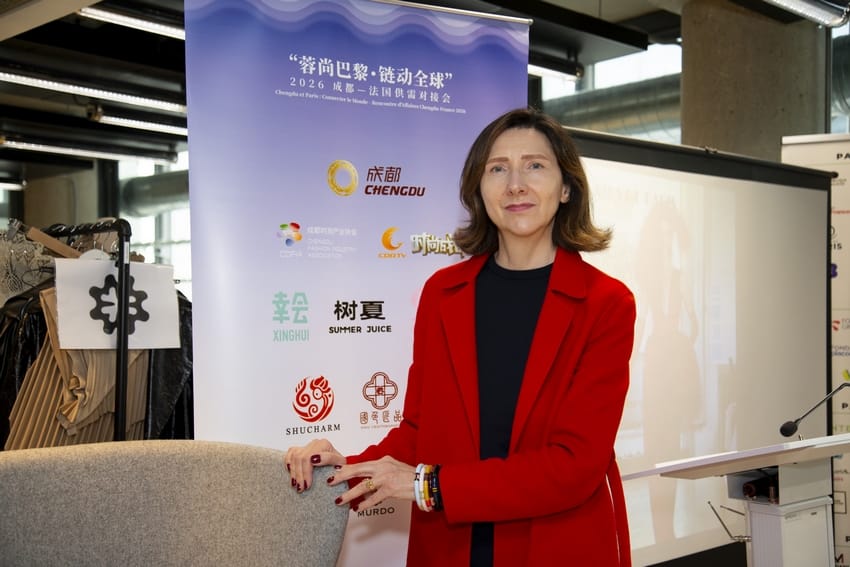
Shuxin Xiao, Secretary General of the Chengdu Fashion Industry Association, opened the event by presenting the main dynamics currently shaping Chengdu’s fashion ecosystem.
She notably highlighted the city’s strengths in terms of culture, industry, education and talent mobility, as well as the richness of its heritage and cultural legacy.
She also presented the prospects for the sector and expressed her wish to see exchanges and collaborations between Chinese and French stakeholders strengthened, through an approach based on the meeting of expertise, the sharing of experiences and the creation of new opportunities.

The event then continued with a professional presentation session bringing together Chinese and French companies, brands and creators.
The objective was above all practical: to give everyone the opportunity to present their world, projects and inspirations, while discovering the practices, sensibilities and expectations of their counterparts.
Brands and studios from Chengdu, ZHISHANYUE, Zhi Niao, and SIJIN, presented their worlds alongside French players such as DEGUELLE, ESSENTY’S, Hello World and Alice Studio.

Each presentation was brief. A few minutes to tell a story, present a material, share a vision or a project.
But behind this apparent simplicity, something more subtle was at play.
It was not simply about Chinese brands “entering” the French market, nor about French companies seeking to replicate their experience in China.

The primary objective was to discover one another in a different way, taking the time to understand each other’s references, sensibilities and practices.
For the Chinese participants, these exchanges provided an opportunity to gain a better understanding of the French creative and professional environment, its codes, expectations and specific characteristics.

For their French counterparts, they provided an opportunity to meet a new generation of Chinese creators, discover their approaches and worlds, but also move beyond certain sometimes reductive perceptions of Chinese creativity.
The exchanges thus opened up discussions on numerous topics: creative language, materials, brand development, environmental responsibility and new forms of creation.

The richness of these encounters lay precisely in their reciprocal nature. It was about taking the time to look at one another, understand each other’s world and identify points of convergence.

China’s Intangible Cultural Heritage
Among the day’s most symbolic moments, the presentation of several textile crafts from China’s intangible cultural heritage held a special place.
Shu brocade, Tibetan-Qiang embroidery, as well as the works presented by the Chengdu Shu Brocade Research Institute and SHUCHARM, brought to the heart of Paris a part of the textile and cultural history of Chengdu and its region.

Brocade and embroidery are not merely techniques.
They are also a form of memory.
A memory made up of colors, patterns, gestures, patience and transmission. Behind each piece lie skills accumulated over generations, but also a particular relationship with time, material, territory and cultural identity.
Embroidery, through the precision of its craftsmanship and the richness of its patterns, like brocade, through the complexity of its weaving and compositions, bear witness to a culture in which the time devoted to creation constitutes a value in itself.
Presenting these crafts in Paris was therefore not simply about showcasing ancient techniques. Their encounter with another cultural environment raised a more contemporary question:
How can ancestral know-how engage in dialogue with the language of today’s creation and design?

Beyond Fashion
The day also extended into other areas of creation: beauty, well-being, design and lifestyle.
Aline Putot-Toupry brought her distinctive artistic perspective, shaped by a sensitive approach to materials, colour and contemporary expression. Her universe lies at the crossroads of several disciplines, where art naturally enters into dialogue with design and fashion.
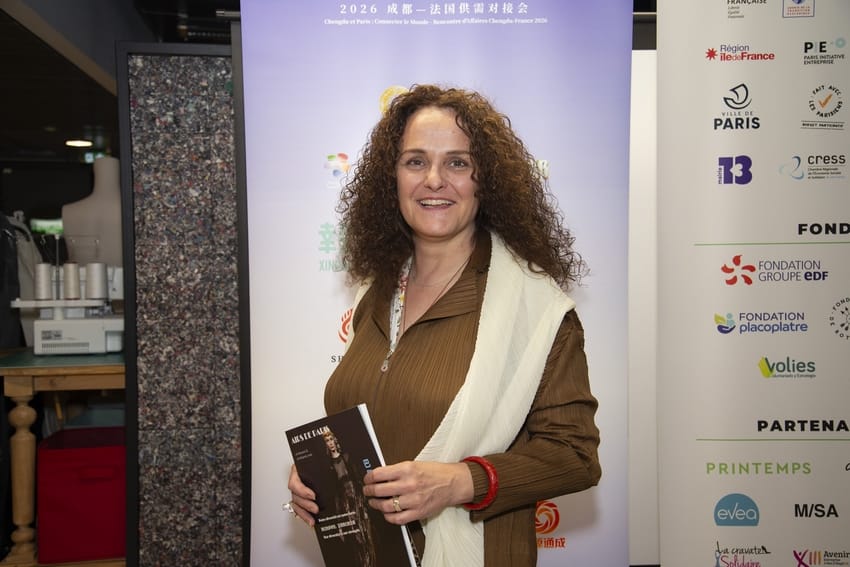
IAMPIÔ, meanwhile, presented a distinctive approach to design and creative expression, highlighting the richness of the exchanges that can emerge between different cultures.
Its vision reminds us that design can become a universal language — one capable of crossing borders and bringing different aesthetic sensibilities into conversation.

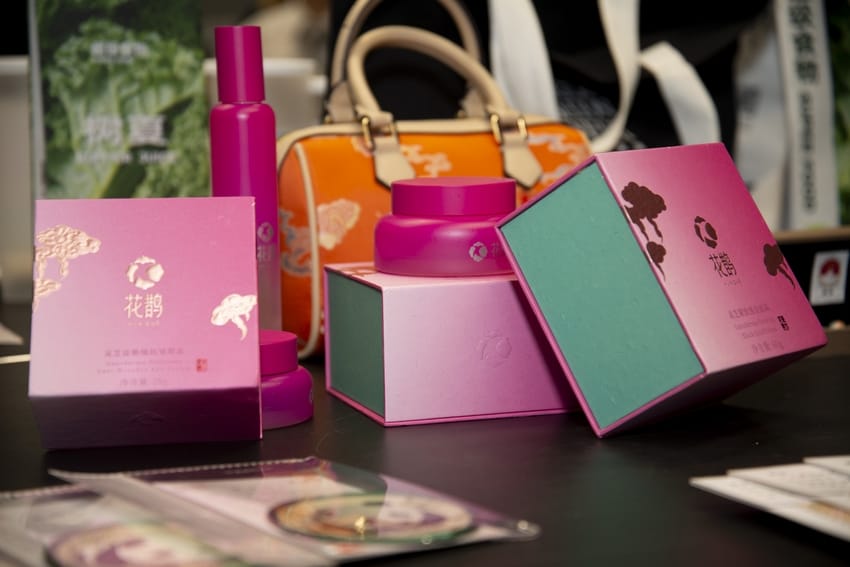
From China, HUAQUE introduced its vision of beauty, drawing inspiration from Traditional Chinese Medicine and presenting an approach in which skincare and aesthetics are part of a broader understanding of well-being.
SUMMER JUICE explored the world of wellness and beverages through a more everyday and sensory approach to lifestyle.
The brand reflects the changing way people consume and experience beverages today: no longer simply a functional product, but also an experience associated with pleasure, balance and conviviality.

Originally from Provence in the south of France, 808 Eau extended this reflection into another dimension — that of place, nature and the art of living.
At the heart of its approach is the notion of the value of place. With 808 Eau, the conversation expanded to encompass local identity, regional heritage and lifestyle. Through the relationship between nature, quality, local resources and traditional know-how, the brand highlights how a product can become a reflection of the land and culture from which it comes.

It expresses a way of living, of looking at the world, of consuming and sometimes even of telling one’s own story.
What Now?
An encounter only truly has meaning when it leaves a lasting mark.
In Chengdu as in Paris, this day made it possible to forge connections, exchange experiences, share perspectives and open up conversations that may, tomorrow, give rise to new collaborations.
And that may be precisely what makes such an encounter so valuable. It does not claim to provide all the answers, nor to define in advance what the relationship between the two ecosystems should be. It creates a space where ideas can circulate, questions can be raised and new possibilities can emerge.
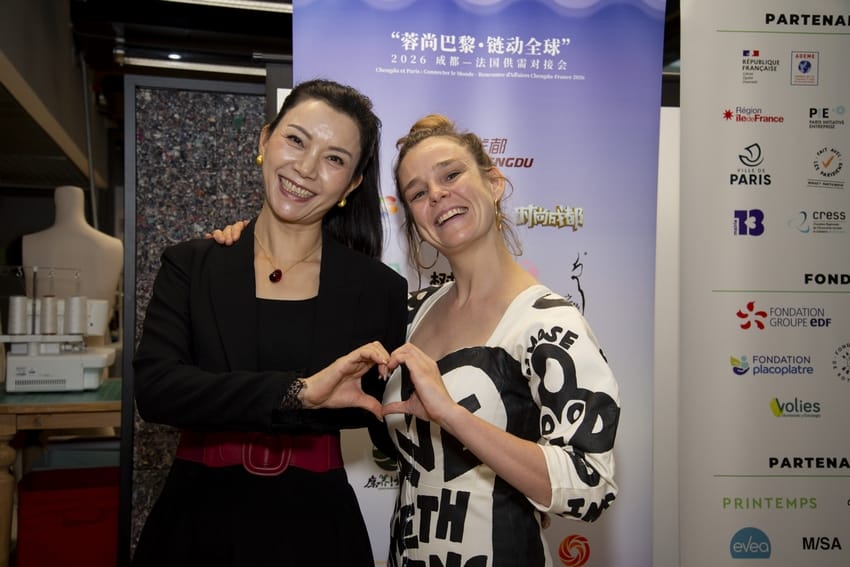
In an era when cultural differences are sometimes perceived as boundaries, creativity can offer another perspective: one in which a boundary becomes a bridge.
The true challenge of cultural dialogue is not simply to better understand the other, but to understand what this encounter can make possible.
Because beyond differences in cultures, practices or markets, one question remains: what can we imagine together?
Perhaps this is where the true value of this encounter between Chengdu and France lies.
Not simply looking at one another, but creating the means to create something together.
And perhaps this is precisely where true dialogue begins.

Rédaction|编辑|Editorial:Hervé
Assistants|助理|Assistants : Yann , Camille , Inès
Français|法语|French :
https://www.airsdeparis.fr/focus/chengdu-paris-le-temps-dun-dialogue/
Chinois|中文|Chinese :
https://airsdeparis.org/focus/chengdu-x-paris/
Anglais|英语|English :
https://airsdeparis.com/focus/chengdu-paris-a-dialogue-across-cultures/
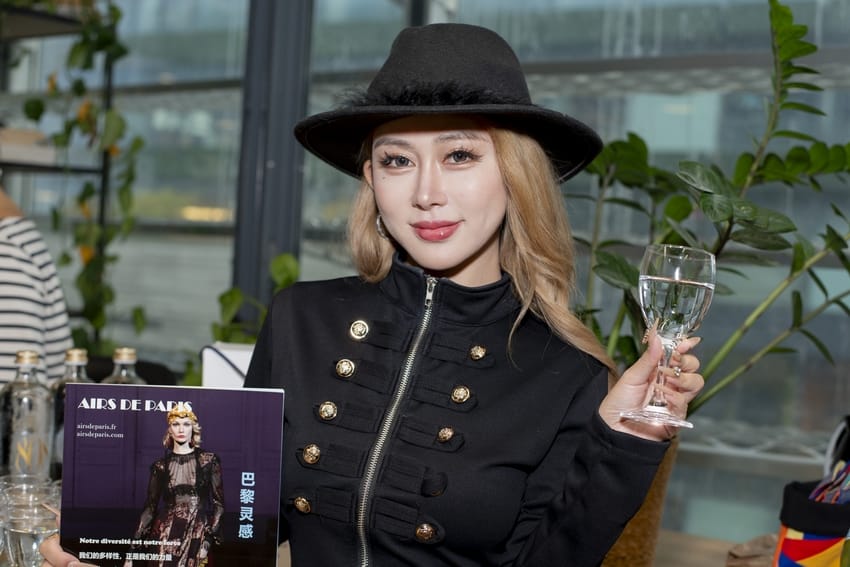
Magazine digital|数字杂志|Digital Magazine
Airs de Paris : 2026 Autumn & winter :
https://airsdeparis.org/a-la-une/airs-de-paris-2026-autumn-winter/

Fashion 2026 – Autumn & winter :
https://airsdeparis.org/publication/airs-de-paris-fashion-2026-autumn-winter/

Kiosque|杂志亭|Newsstand
Édition papier |纸质版 |Print Edition
https://www.journaux.fr/produits/presse/F%C3%A9minin-6/Airs-de-Paris-280044

Abonnement|订阅|Subscription
https://www.uni-presse.fr/abonnement/abonnement-magazine-airs-de-paris/
