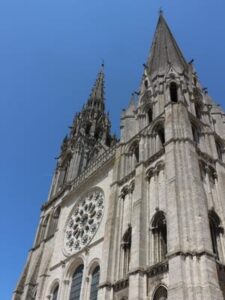
Chartres Cathedral is far more than a religious building. It is a unique meeting place where art, faith, and history come together.
Every stone and every architectural detail bears witness to the spiritual and artistic richness of the medieval period, making this monument an essential part of the world’s cultural heritage.
Where Art, Faith, and History Meet
Chartres Cathedral holds an exceptional distinction: it was the first cathedral in the world to be inscribed on the UNESCO World Heritage List. This gives it a special status among France’s historic monuments.
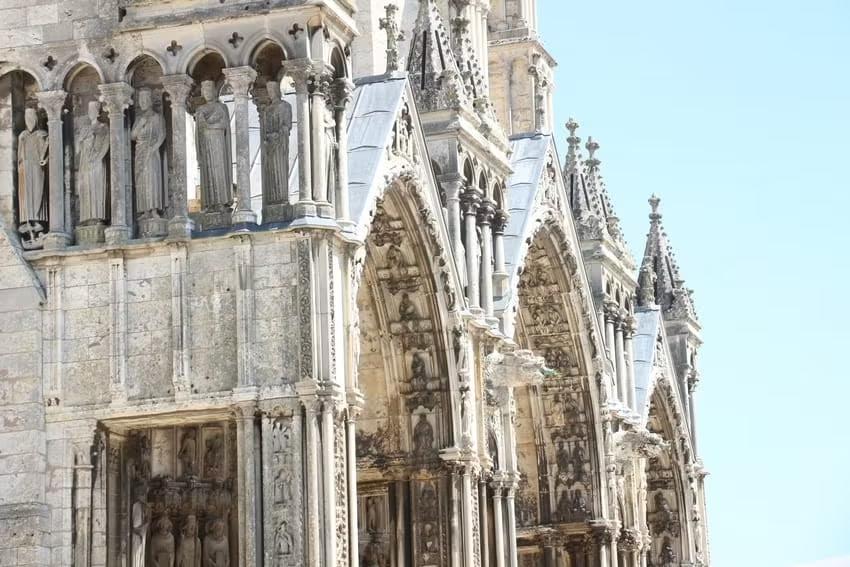
Its Gothic architecture is a remarkable feat of innovation and served as a model for cathedrals such as those of Amiens and Reims, as well as Notre-Dame de Paris.
Each stained-glass window tells a story, taking visitors on a journey through time. The colored light and unique atmosphere create an immersive experience, somewhere between spiritual contemplation and artistic discovery.
Gilles Fresson, a passionate professional tour guide, invites every visitor to explore and appreciate this invaluable treasure of world heritage.
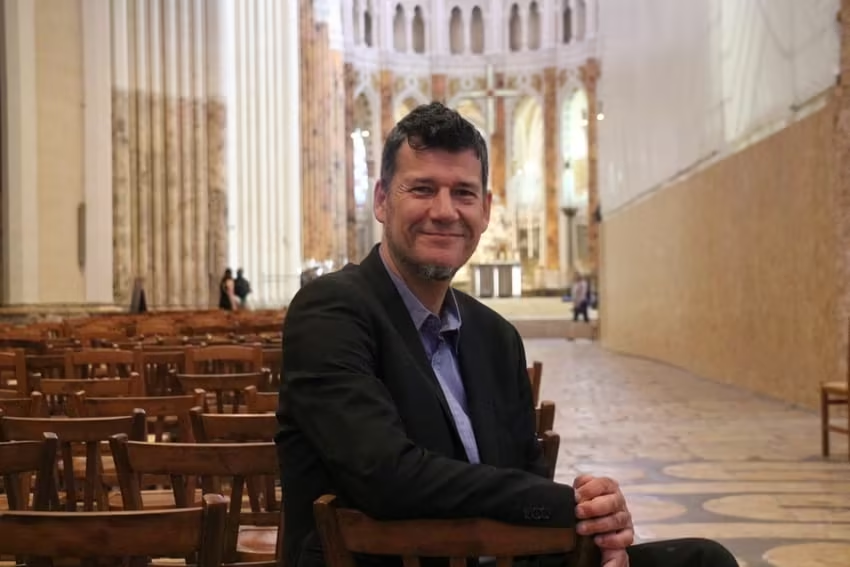
What makes Chartres Cathedral unique compared with other Gothic cathedrals?
Chartres Cathedral draws on a variety of architectural influences, including elements found in the famous Notre-Dame de Paris. Although the two buildings were constructed at roughly the same time, Chartres Cathedral was completed at an exceptionally rapid pace.
This Gothic architectural model, which emerged during this period, continues to inspire contemporary architects, whether they are designing skyscrapers in Shanghai or Dubai. The logic of its structural framework and lines remains remarkably modern even today. In this sense, Chartres continues to be a reference point and a source of inspiration for architecture around the world.
Another remarkable feature of Chartres Cathedral is its exceptional state of preservation, which contributed to its inscription on the UNESCO World Heritage List.
The year 1194 is a key date in its history. A major fire destroyed the earlier cathedral, which had featured thick walls, small windows, and a wooden roof structure. Following this tragic event, the decision was made to rebuild the cathedral in the Gothic style, creating a structure that was lighter, more open, and filled with light.
Construction began in 1194, and within just 25 years, priests were already celebrating services beneath the completed vaults. This was a remarkable pace of construction, especially compared with other cathedrals that sometimes took 100, 200, or even 300 years to complete.
Chartres can therefore be described as a “dream cathedral”—almost exactly what a master builder of the Gothic period might have imagined.
What makes it truly unique is that it has undergone remarkably few major alterations over the centuries. Unlike other cathedrals, where additions in different architectural styles were made or entire sections were rebuilt, Chartres has remained remarkably faithful to its original design.
The cathedral’s state of preservation is simply exceptional: 100% of its architecture is original, with no major section having been reconstructed. Approximately 95% of its sculptures remain intact—missing heads are extremely rare and constitute exceptions. In addition, around 80% of the stained-glass windows are original, further contributing to Chartres Cathedral’s worldwide reputation.
What historical events contributed to the preservation of Chartres Cathedral’s stained-glass windows?
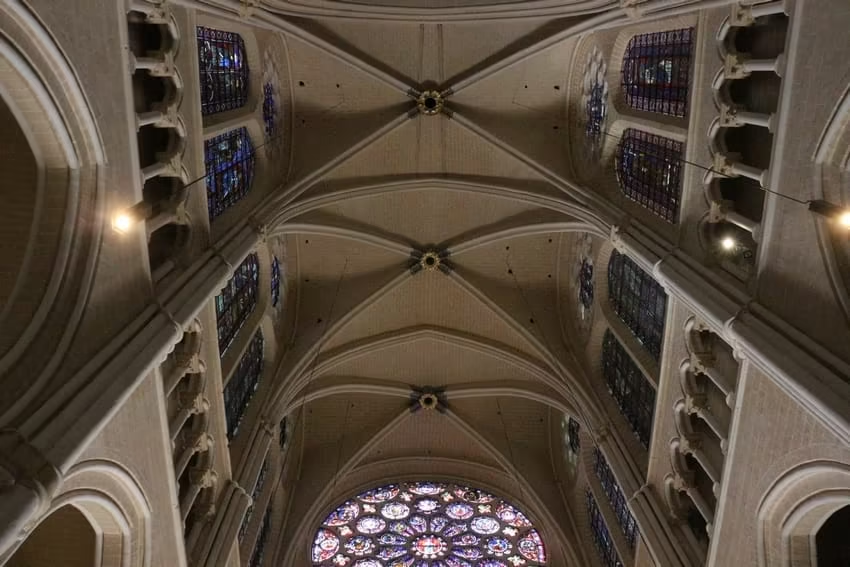
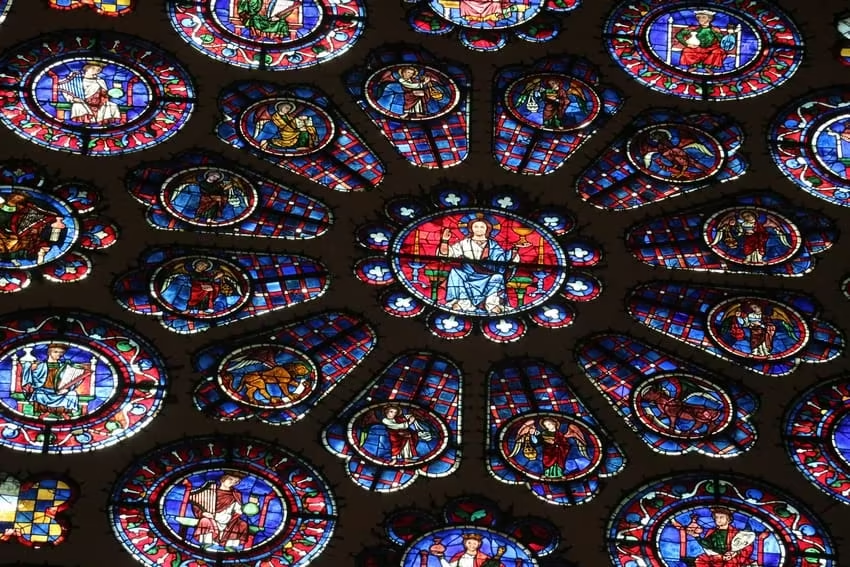
Look around you: all the stained-glass windows you see here date from the cathedral’s original construction. This is fascinating, especially when we consider how fragile these works of art are. They survived the Hundred Years’ War, the Wars of Religion, the French Revolution, sometimes imperfect restoration work, and even both World Wars.
During the Second World War, the stained-glass windows were carefully dismantled and packed away in 1939–1940. They were then reinstalled between 1946 and 1947 by master glassmakers. Thanks to these meticulous efforts, we can still admire almost the entire collection of original stained glass today.
These windows form a kind of visual Bible. They tell stories just as biblical texts do. More precisely, you could think of them as a library of comic strips, because they illustrate biblical stories as well as the lives of saints. Some of the scenes are inspired by the Bible without directly depicting passages from it.
The upper sections of the windows have a different purpose. I would describe them as “posters,” because they feature large, life-size figures.
In total, the cathedral contains more than 170 stained-glass windows, creating an entirely unique ensemble.
I am not simply promoting Chartres—it is an established fact. We are proud to have more than 80% of our original stained glass, which is exceptional. To give you a comparison, only around 45% of the original stained glass remains in Bourges, while in Paris, only about 10% of the windows genuinely date from the Middle Ages. Here in Chartres, our original glazing has remained remarkably intact.
How does the discovery of the original plasterwork on the cathedral’s walls change our understanding of medieval art and architecture?
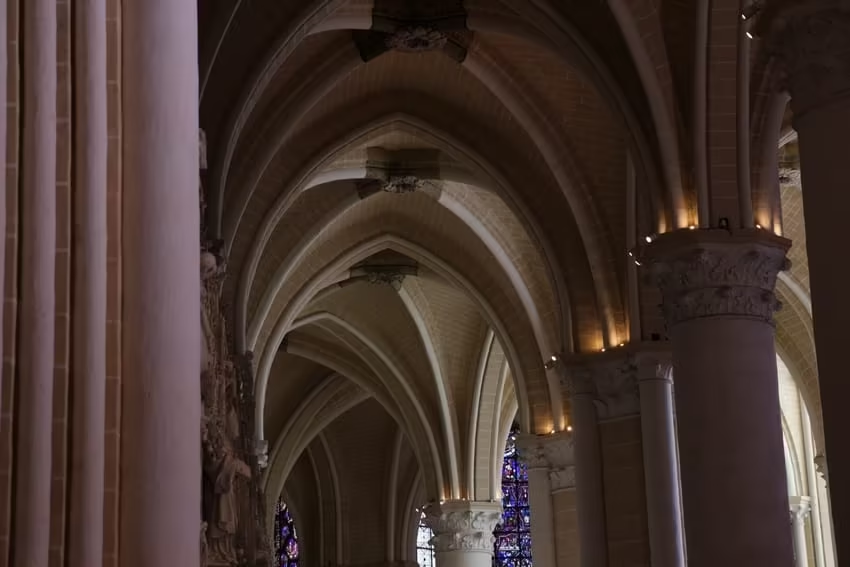
What is truly fascinating about the cathedral is the preservation of the original plasterwork on its walls. During the recent restoration, many people were surprised to discover that, far from simply being darkened walls marked by the passage of time, the cathedral had preserved not only its stained glass and sculptures, but also the plaster applied during the Middle Ages.
At that time, the walls were not left as bare stone. They were covered with a sand-based plaster. This coating concealed the stonework, and craftsmen added false joints to create the appearance of perfectly finished masonry.
The plaster has been carefully preserved and essentially required only cleaning. Today, following an extensive restoration campaign, we can rediscover these walls much as they would originally have appeared.
What we see is therefore not bare stone, but this period plasterwork, reflecting the medieval vision of the Heavenly Jerusalem, the celestial city described in the final pages of the Bible.
The columns, which were once painted white, and the walls carefully covered with plaster reveal the artistry and symbolism of the medieval period. They demonstrate just how far the conception of the cathedral went beyond architecture alone.
Who were the builders?
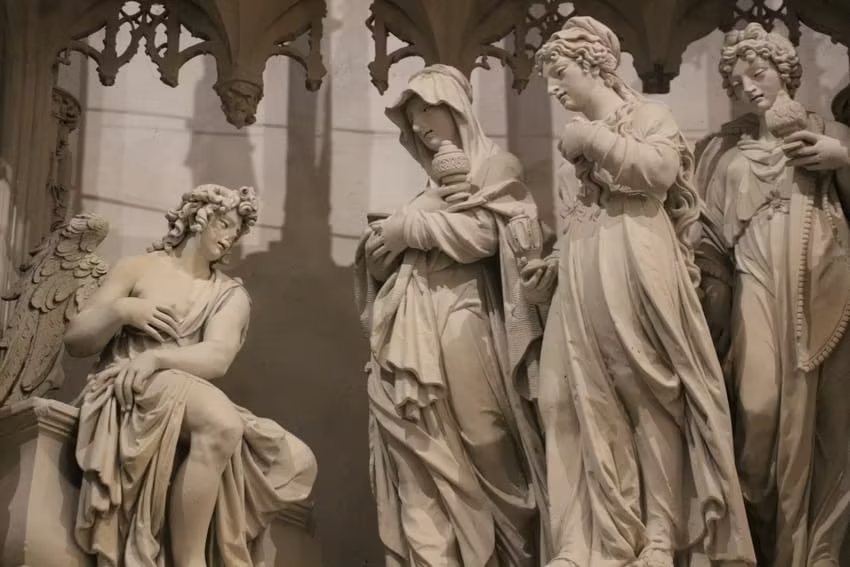
In reality, the brilliant craftsmen who built the cathedral remain anonymous. Although we do not know the names of these builders, we do know who commissioned and directed the work: the religious authorities.
As a cathedral, the principal figures responsible were the Bishop of Chartres and the senior clergy of the region.
We have information about certain clerics and theologians—men who devoted their lives to the study of God and to philosophical and spiritual reflection. They formulated the instructions, including the symbolic choices: why a particular color should be used, or why a particular story should be represented in the stained glass, for example.
Yet the craftsmen—the masons, sculptors, carpenters, and other workers who actually designed and built the cathedral—remain in the shadows.
There are no surviving archives concerning these workers, not even their names. Perhaps they did not seek recognition. At the time, working on a cathedral was often regarded as an offering to God: a collective undertaking in which the individual disappeared before the divine.
It is fascinating to realize that these masterpieces, which have survived for centuries, are the work of anonymous individuals united by a common vision and a profound faith.
The builders of these great structures were exceptional craftsmen, truly at the forefront of their profession. They represented the elite of their fields—experts constantly seeking to push the boundaries of architecture.
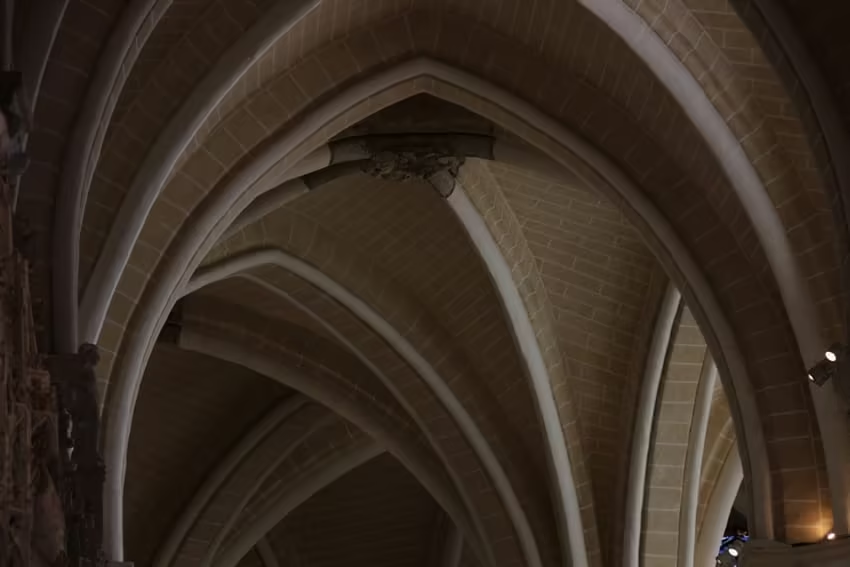
Here, for the first time in history, a 120-metre-long nave was constructed with a vault rising to 37 metres along its entire length.
This architectural achievement is simply extraordinary. A stone ceiling at such a height had never been built on this scale before. It was a genuine feat of engineering for its time and a remarkable testament to the genius of its builders.
Does Chartres Cathedral represent an extraordinary achievement?
Yes, it is unquestionably a monumental achievement. It is as if the Western world experienced a sudden awakening, marked by an explosion of technological innovation, scientific advances, and architectural accomplishments. This reflects not only scientific progress, but also a more favorable economic period that made it possible to create something truly remarkable.
It is important to note that it is not only the architecture that is fascinating. The stained-glass windows were also an extraordinary innovation at the time. Today, we are surrounded by luminous images through television, the Internet, and smartphones. In the Middle Ages, however, people had never seen anything like this. The only images available to them were illuminated manuscripts, often tiny illustrations measuring just a few centimeters across, appearing only every several pages.
Imagine their astonishment when they encountered a stained-glass window eight meters high, telling an entire story through light. It must have been an absolutely extraordinary and almost unimaginable experience. Moreover, the cathedral’s stained glass does not consist merely of a few small windows: it covers an impressive area of around 2,500 square meters. This vast expanse made the experience even more spectacular. It was truly an achievement on every level.
Was Chartres Cathedral the first cathedral in France?
No, it was not the first cathedral. What distinguishes it is the exceptionally rapid pace at which it was built—in just 25 years, which was remarkable for the period.
To accomplish this feat, numerous master builders were brought together. Although they remain anonymous today and their names are unknown, research has enabled us to trace their origins and understand where they came from. These master builders had worked on other cathedral construction sites that were underway at the time, bringing with them their best ideas and techniques.
At Chartres, all these innovations came together, giving rise to what might be described as a “new-generation Gothic” style. It represented a major advance, bringing together and refining the emerging ideas of Gothic architecture, which here reached a particularly accomplished form.
Although Chartres Cathedral was not the first Gothic cathedral—the distinction generally goes to the Basilica of Saint-Denis, near Paris—it was the first to bring together all the new technologies of the period, making it a model building. At Chartres, the most successful ideas of Gothic architecture were brought together and put into practice, marking a decisive stage in the evolution of the style.
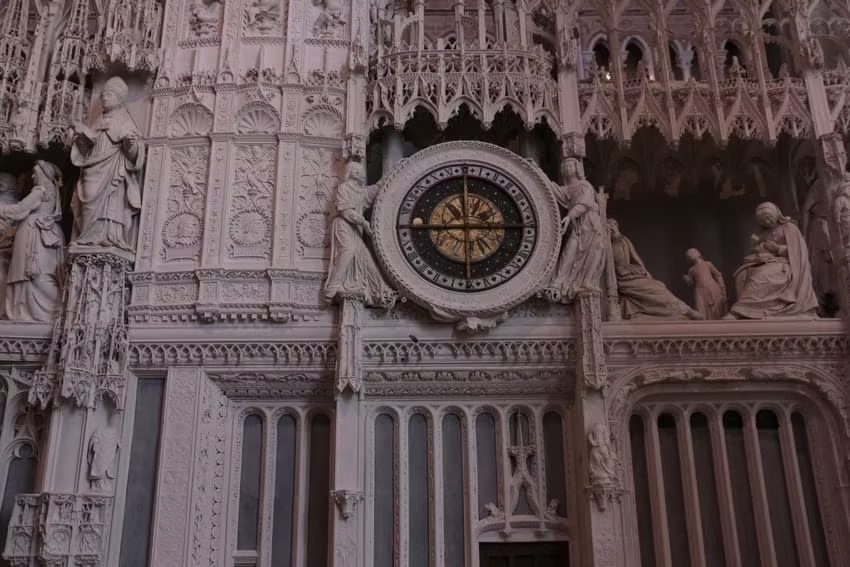
What stories do the stained-glass windows of Chartres Cathedral tell?
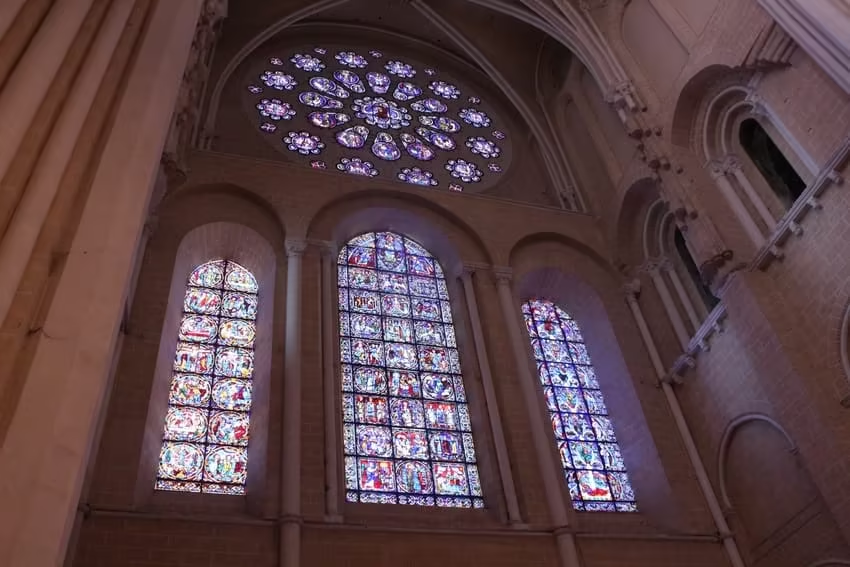
As I mentioned, the stained-glass windows of Chartres are genuine storytellers. For example, those on the main façade illustrate the story of Jesus, organized into three major sections. At the center is his genealogy, followed by the story of his life, while the final window evokes the Passion, death, and Resurrection of Jesus.
Every element of the windows carries meaning. Shapes and colors were carefully chosen to express symbolic ideas. In the genealogy window, the kings are initially represented within squares. We then see an alternation of squares and circles, eventually giving way to circles alone.
The square symbolizes the human world, representing the four cardinal directions and the four elements—fire, earth, air, and water. The circle, by contrast, has neither beginning nor end and therefore evokes infinity and the divine.
The colors also carry powerful symbolism. In the first window, blue dominates, representing water, motherhood, and the beginning of things. In the second, blue is combined with other colors, marking a transition. The third window moves toward yellow, the color of the sun and light.
This deliberate progression symbolizes a movement from darkness—the blue of water—toward light—the yellow of the sun—suggesting an ascent toward illumination and the divine.
The magic of the stained glass lies in its ability to speak to visitors on several different levels. You can simply appreciate its beauty and vivid colors, or you can immerse yourself in its rich symbolism. It all depends on your sensitivity. If you are interested in art, you will notice the subtle variations in color and the fascinating details. If you are passionate about history, you can follow the stories they tell, almost like a medieval graphic novel.
Most of the cathedral’s stained-glass windows date from around 1200–1210, although those on the main façade are somewhat older, having been created around 1150, before the great fire. Their survival is truly remarkable, giving them exceptional historical and artistic value.
These earlier windows from around 1150 differ in several ways. Their panels are larger and more square in shape, with a simpler framework. They also feature the famous “Chartres blue,” a color that fascinates people around the world. This blue is more intensely azure and less purplish than the blue used in the windows of the early 13th century. It has resisted corrosion over time and remains as vibrant as it was originally.
These are among the oldest and largest surviving stained-glass windows from the 12th century. At Chartres, we are fortunate to possess not only some of the largest windows of the period, but also some of its major masterpieces. While other European museums display small panels measuring roughly one meter by one meter, here we can admire monumental and extraordinary stained-glass windows.
All the cathedral’s other windows were created at the same time as the architecture, around 1200–1210. It is astonishing that almost all of them have survived intact, with very few missing or damaged elements.
Does Chartres Cathedral house a relic associated with Mary?
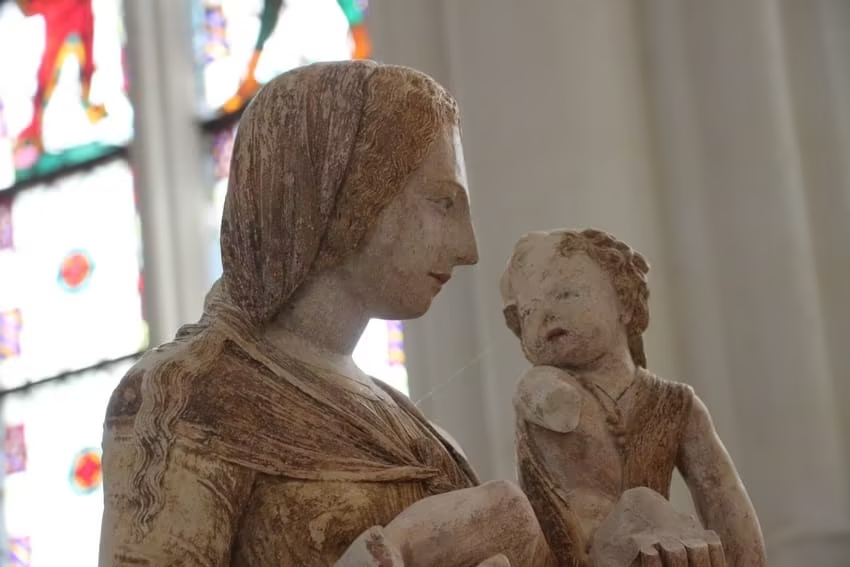
Yes. Chartres Cathedral houses a relic associated with the Virgin Mary, known as the Veil of the Virgin. According to tradition, it was worn by Mary on the day Jesus was born, making it one of the most precious relics in Christianity.
It was presented to the cathedral in 876 by Charles the Bald, King of France. The tradition and devotion surrounding this relic helped make Chartres Cathedral an important center of Marian pilgrimage.
For medieval men and women, the presence of this garment symbolized Mary’s “wardrobe.” This simple yet evocative expression reinforced the idea that the space belonged entirely to her. It was largely this conviction that helped inspire the cathedral’s rapid construction on such a grand scale.
In their minds, the cathedral was regarded as Mary’s true home. Some experts have also noted that the cathedral seems to possess a more feminine atmosphere, directly connected with devotion to Mary.
An interesting fact is that Chartres differs from other cathedrals in having no tombs at all. It is said to be the only cathedral in which no one is buried. This was linked to the medieval belief that the dead should not be buried inside a house, because their presence would introduce death into the space.
Since the cathedral was regarded as Mary’s home, the builders wanted to create a place entirely dedicated to her—a peaceful and sacred space.
This absence of burials therefore contributes to the cathedral’s unique atmosphere, imbued with the spiritual presence of Mary. One can easily imagine the medieval conception of Mary returning to this space each morning, and withdrawing there alone in the evening, surrounded by absolute serenity. This vision inspired both the builders and the faithful of the period.
How did medieval builders combine engineering and symbolism in cathedral construction?
What is fascinating is that medieval builders constantly combined technical expertise with symbolism. For them, these two worlds were not separated as they often are today. Symbolism was intuitive, poetic, and even spiritual, while technical knowledge was based on experience and ingenuity.
By bringing these two dimensions together in their architecture, they created buildings that combined extraordinary technical achievement with profound meaning.
The cathedral teaches us, for example, a way of thinking in which technology and symbolism are intimately connected. For the builders of the time, these two dimensions formed a single whole. A well-formulated mathematical theorem or a well-designed structure could be understood as a manifestation of divine knowledge. Building something that was symbolically correct therefore also reinforced the strength and harmony of the structure.
This approach may seem surprising to us today, because we tend to separate science and intuition, technology and spirituality. Yet for these builders, the pursuit of technical perfection was a way of drawing closer to God. They believed that a sound structure reflected a divine order.
Initially, cathedral builders relied primarily on experience and intuition, without the sophisticated mathematical tools available to us today. They did not have precise calculations or the kind of vector-based modeling used in modern architecture. They learned directly on construction sites, through observation and experimentation.
However, from around 1200–1250, architects began to use rudimentary mathematical calculations to improve their constructions. It is remarkable to think that they were able to erect such majestic and durable structures with such simple tools. The cathedral bears witness not only to their technical expertise, but also to their faith and their vision of the world.
Finally, when discussing the splendor of the cathedral, it is impossible not to mention its stained glass, among the most famous in the world. These windows are masterpieces of art and light, reflecting the idea that light represents God, while colors symbolize humanity. It is a magnificent union of the spiritual and the material that continues to captivate visitors from around the world.
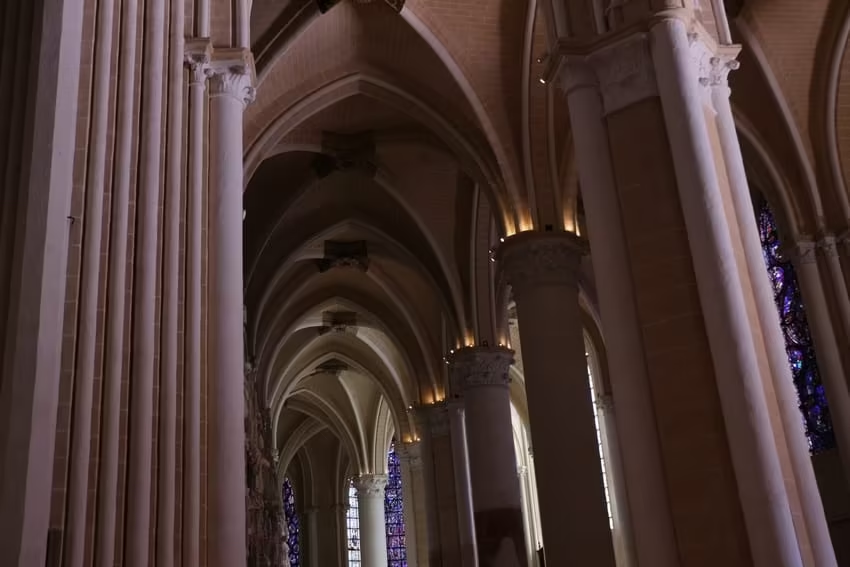
It was a genuine architectural revolution, deeply rooted in the observation of nature. Take a moment to contemplate the cathedral: its graceful arches and majestic pillars evoke the image of a living forest. The pillars, like sturdy tree trunks, support arches reminiscent of branches reaching toward the sky. The leaf-covered capitals reinforce this impression, transforming the building into a veritable forest of stone.
When we look closely at this extraordinary work, we realize that medieval builders brilliantly combined innovation with a profound respect for nature. They developed revolutionary construction techniques inspired by trees and their structures. This approach offers us a fascinating lesson—one that continues to resonate with contemporary architecture today.
A Weekend in Chartres
If you are planning to spend a weekend in Chartres to visit Chartres Cathedral, here are a couple of addresses worth considering:
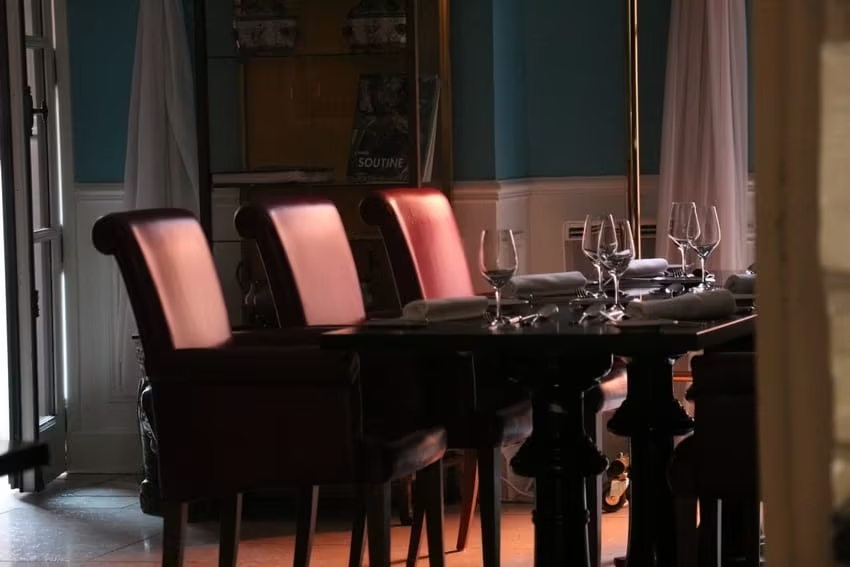
Le Grand Monarque
This four-star hotel is a true institution in Chartres. Ideally located near both the railway station and the cathedral, it offers impeccable service. Guests can enjoy its facilities, including a spa, a bar, a brasserie, and even a Michelin-starred restaurant.
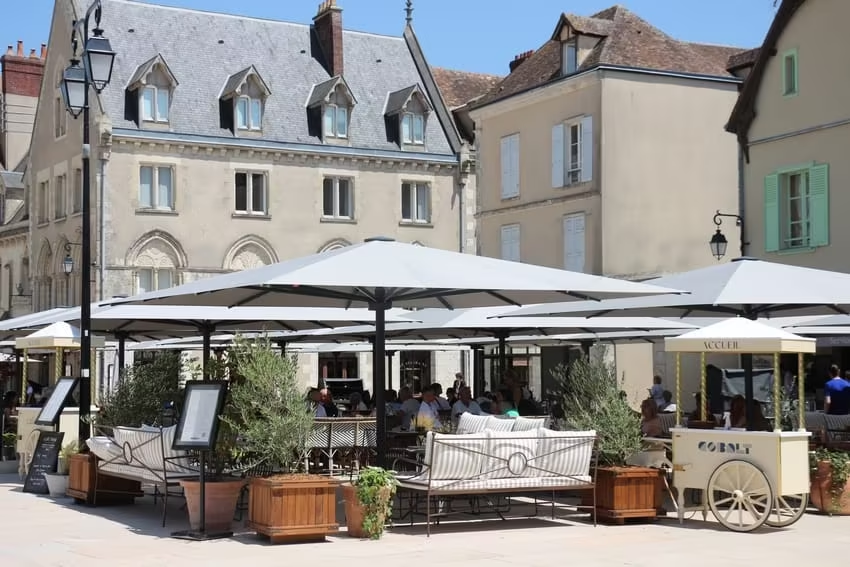
Café Bleu
Located directly opposite Chartres Cathedral, this pleasant café is known for its creative dishes prepared with fresh, seasonal ingredients. The service is quick and the staff welcoming, making it an ideal place to enjoy a meal after a day of sightseeing.
Interview: Wendy
Editorial: Hervé
Photography: Charles
Magazine digital: 2025 -1
∼∼∼∼∼∼∼∼∼∼∼∼∼∼∼∼∼∼

https://airsdeparis.com/publication/airs-de-paris-2025-printemps-ete/
Magazine digital – Fashion
∼∼∼∼∼∼∼∼∼∼∼∼∼∼∼∼∼∼

https://airsdeparis.com/publication/airs-de-paris-2024-mode-2/
∼∼∼∼∼∼∼∼∼∼∼∼∼∼∼∼∼∼
Magazine imprimé
∼∼∼∼∼∼∼∼∼∼∼∼∼∼∼∼∼∼∼∼∼

https://www.journaux.fr/airs-de-paris_mode-beaute_feminin_280044.html
∼∼∼∼∼∼∼∼∼∼∼∼∼∼∼∼∼∼∼∼∼
Abonnement dans le monde
∼∼∼∼∼∼∼∼∼∼∼∼∼∼∼∼∼∼∼∼∼

https://www.uni-presse.fr/abonnement/abonnement-magazine-airs-de-paris/